

Introduction
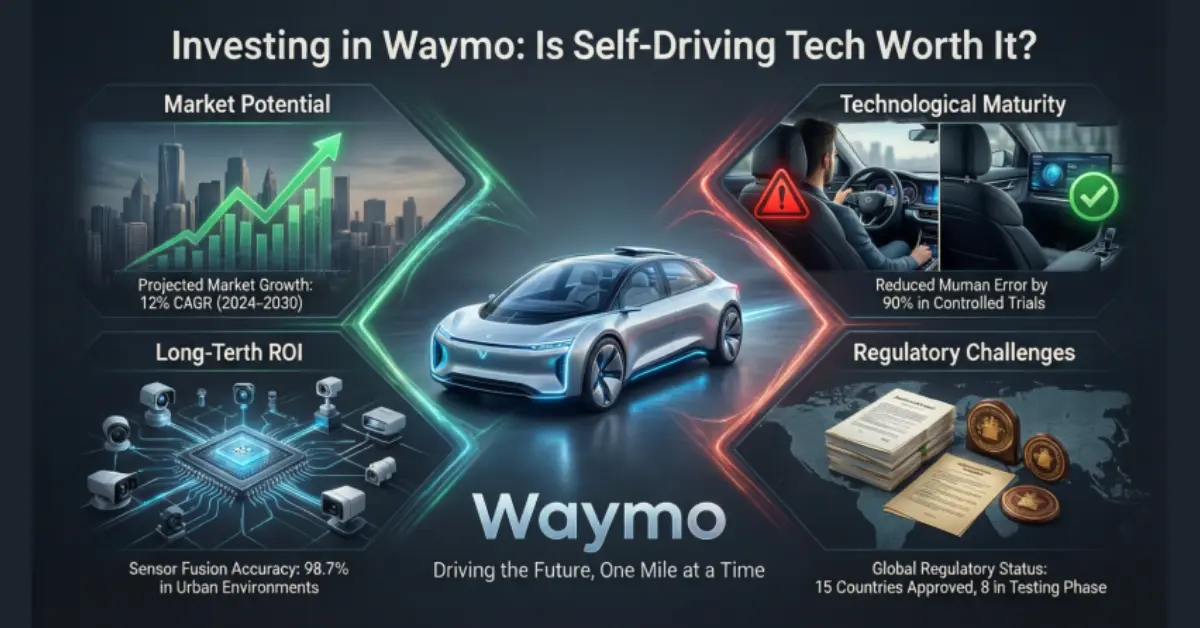
Waymo started as a bold experiment inside Google back in 2009. The goal was simple but ambitious: create a car that could drive itself safely in the real world. Over the years, that small project grew into one of the most advanced autonomous vehicle companies on the planet.
Today, Waymo isn’t just testing vehicles in isolated areas. It’s running fully driverless taxis in cities like Phoenix, mapping millions of miles of roads, and quietly building a technology platform that could change the way people move from point A to point B.
For investors, Waymo matters because it represents the intersection of cutting-edge technology and real-world application. While it’s still part of Alphabet, its progress hints at massive long-term potential. Whether you’re thinking about self-driving cars, delivery automation, or AI-driven logistics, Waymo sits at the center of that conversation.
Table of Contents
Understanding Waymo’s Business Model
Waymo isn’t just building cars that drive themselves-it’s building a full ecosystem around autonomous transportation. Its business model focuses on three main areas:
- Robotaxis – Waymo One operates fully driverless ride-hailing services in select cities. Imagine summoning a car that doesn’t need a driver, runs efficiently, and keeps improving over time. This is the most visible part of its business.
- Autonomous Trucking and Logistics – Beyond passenger transport, Waymo is exploring long-haul trucking and freight delivery. Autonomous trucks can reduce costs and improve efficiency, especially for routes that are repetitive and long-distance.
- Technology Licensing – Waymo also develops AI, sensors, and mapping systems that can be licensed to other automakers or mobility companies. This allows it to generate revenue without owning the entire vehicle fleet.
All of these streams feed into long-term growth potential. While robotaxis may take time to scale profitably, licensing technology or trucking could start generating revenue sooner.
Within Alphabet, Waymo sits under the “Other Bets” category-a sandbox for ambitious projects that may not yet contribute massive profits but could deliver huge upside over time. This positioning allows Waymo to innovate freely while leveraging Alphabet’s resources, expertise, and capital.
Ways to Invest in Waymo
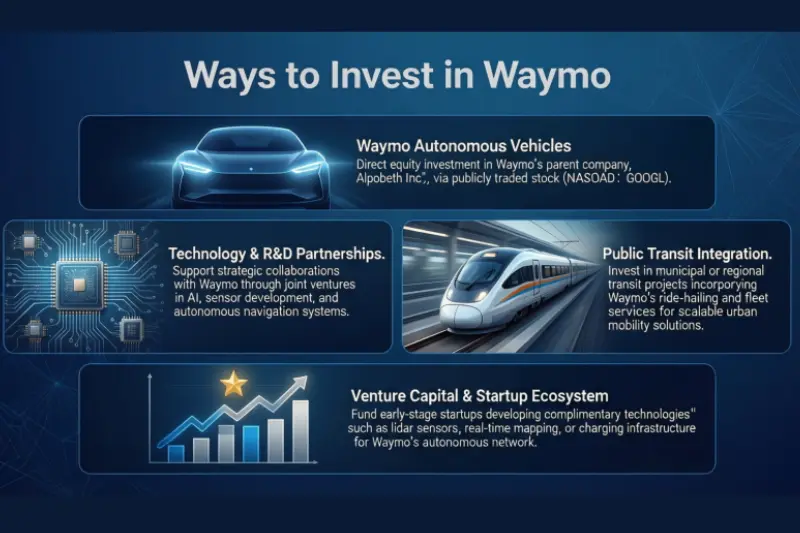
If you’re thinking about investing in Waymo, the first thing to know is that there’s no direct stock you can buy. Waymo is still a private company, so you can’t simply open a trading app and purchase shares. That doesn’t mean you can’t gain exposure-it just requires a different approach.
Indirect Investment Through Alphabet Stock
The most common way to invest is by buying Alphabet (GOOGL) shares. Waymo is part of Alphabet’s “Other Bets,” which also includes projects like DeepMind and Verily. When you invest in Alphabet, you’re essentially buying a piece of Waymo along with a stable, revenue-generating tech giant. It’s a way to benefit from Waymo’s long-term growth while limiting risk compared to a standalone, unproven company.
Alternative Exposure Through ETFs or Venture Funds
Some technology-focused ETFs or venture capital funds include Alphabet or other autonomous vehicle initiatives. While this isn’t a pure Waymo investment, it can give you diversified exposure to the autonomous driving sector. This approach spreads risk and can be especially appealing if you’re interested in the future of mobility but don’t want all your money in a single stock.
May be you like it:
How Long Does It Take to Learn Day Trading Effectively?
Boost Your Career with an Online Accounting Diploma
Smart Strategies for Generational Wealth Management
What Is a Smart Investment – Simple Guide for Beginners
Waymo vs. Other Autonomous Vehicle Companies
When it comes to self-driving technology, Waymo isn’t the only player. Companies like Tesla, Cruise, Aurora, and others are all racing to bring autonomous vehicles to the streets. But not all of them are on the same level, and understanding the differences is key if you’re thinking about investing in Waymo.
Real-World Data and Testing
One of Waymo’s biggest advantages is its massive real-world dataset. Its vehicles have logged millions of miles on public roads, navigating everything from busy city streets to complex highway scenarios. Many competitors, like Aurora or Cruise, are still testing in controlled environments or rely on safety drivers, which limits their exposure to real-world situations.
AI and Mapping Expertise
Waymo has developed some of the most advanced AI and mapping systems in the autonomous vehicle space. Its cars don’t just “see” the road-they understand it, anticipate changes, and adjust in real time. This expertise gives Waymo a significant edge when it comes to reliability and safety-two factors critical for public adoption and investor confidence.
Competitive Landscape and Differentiation
While Tesla focuses on semi-autonomous systems for consumers and Cruise aims to scale urban robotaxis, Waymo has a head start in fully autonomous ride-hailing. Its focus on real-world deployment rather than consumer features sets it apart. In short, Waymo isn’t just testing the future-it’s operating it, and that’s a crucial differentiation for long-term growth.
Current Market Opportunities
Talking about investing in Waymo isn’t just about a cool car driving itself. It’s about the bigger trends shaping how people and goods will move in the future – and where the money might go along with them.
Autonomous Vehicle Adoption Trends
People used to joke about self‑driving cars like they were something out of a sci‑fi movie. Now? They’re showing up on real roads, carrying real passengers. That shift matters because adoption isn’t just about technology – it’s about trust.
Every time someone takes a driverless ride without gripping the armrest, it chips away at skepticism. Cities and companies start paying attention. Regulators start adjusting rules. And suddenly, what felt distant begins to feel inevitable. That’s a trend every investor watches.
Expansion in Ride‑Hailing, Logistics, and Delivery
The way we get around isn’t the only thing changing. How things move is changing too.
- Ride‑hailing: Waymo’s robotaxis are already operating in select cities. Think of it as Uber without drivers – lower labor costs and potentially higher margins once scale kicks in.
- Logistics: Trucks spend a lot of time on highways doing repetitive work. That’s the perfect environment for autonomous systems to shine. Waymo’s trucking efforts aim right at that slice of the market.
- Delivery: Last‑mile delivery is one of the costliest parts of shipping. If autonomous tech makes that cheaper and more reliable, businesses take notice fast.
Each of these verticals – people, goods, packages – represents a real revenue opportunity, not a futuristic hypothesis.
Market Size Projections for Self‑Driving Technology
Look at the numbers and it’s hard to ignore the scale of the opportunity. Analysts forecast hundreds of billions of dollars for autonomous vehicle markets in the coming decade. Not one tiny slice – all slices: passenger transport, commercial fleets, logistics, and more.
Now – projections are projections. They change. But what’s notable here isn’t just size. It’s momentum. The industry isn’t waiting. Car makers, tech giants, regulators, and cities are all placing bets.
Risks and Challenges of Investing in Waymo
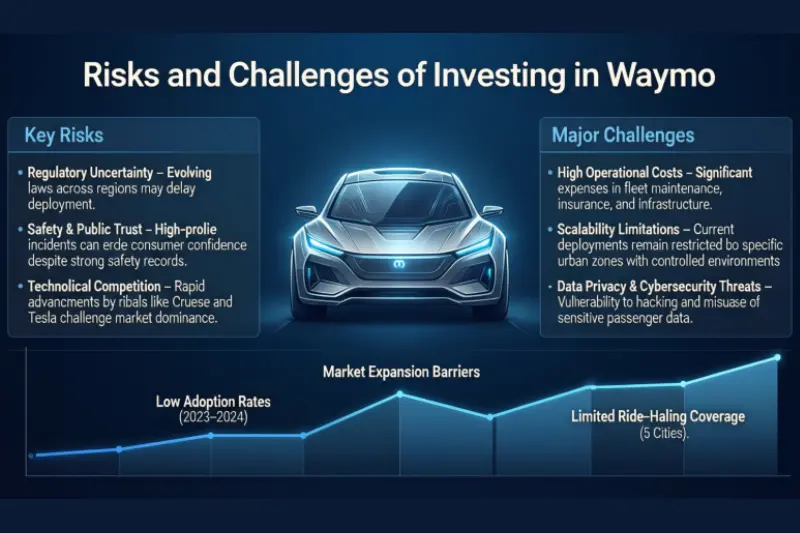
While the promise of autonomous vehicles is exciting, anyone thinking about investing in Waymo should understand the real risks involved. Technology this advanced doesn’t come without challenges.
Regulatory Hurdles and Government Policies
Autonomous vehicles operate under a patchwork of local, state, and federal regulations. One accident or policy change can slow deployment significantly. Cities may impose limits, require extensive testing, or even pause driverless programs, all of which can affect Waymo’s growth timeline.
High Operational and Scaling Costs
Running fully autonomous vehicles isn’t cheap. Waymo invests heavily in sensors, AI development, mapping, maintenance, and software updates. Scaling these operations to new cities or expanding fleets requires enormous capital, and profitability may take years to materialize.
Technological Challenges and Accident Risk
Even with Waymo’s advanced AI and extensive testing, unexpected situations can happen – erratic human drivers, construction zones, or severe weather. Any high-profile incident can impact public trust, slow adoption, and invite additional regulatory scrutiny.
Alphabet Stock May Not Immediately Reflect Waymo’s Success
It’s easy to assume that Waymo’s technological progress will instantly boost Alphabet’s stock price. In reality, Alphabet’s shares are primarily driven by advertising revenue, cloud services, and overall market conditions. Waymo’s gains may contribute slowly over the long term rather than in sudden spikes.
Long-Term Potential of Waymo
When people think about investing in Waymo, the short-term numbers might not seem impressive. But the long-term potential is where this company really shines.
The Future of Transportation
Autonomous vehicles are poised to fundamentally change how we move. Fewer accidents, smoother traffic, and more efficient routes are just the beginning. Waymo isn’t just testing technology-it’s shaping a future where driverless cars are a normal part of daily life. For investors, that means potential growth that extends far beyond quarterly earnings.
Societal Impact: Safety, Efficiency, and Cost Savings
Waymo’s technology could have ripple effects across society. Fewer accidents mean lower insurance costs and reduced healthcare spending. More efficient logistics could cut fuel usage and delivery times. And robotaxis might make urban transportation more affordable and accessible. These benefits not only create business opportunities but also strengthen Waymo’s role as a transformative technology company.
Timing Matters
With long-term innovation like Waymo, patience is everything. Investing too early may test your nerves, but missing the adoption curve could mean missing a once-in-a-generation growth story. Successful investors often think in decades, not months, watching how technology, regulation, and public trust converge over time.
In short, Waymo isn’t just a car company-it’s a long-term vision play. For patient investors, the payoff may come years down the line, but the societal and financial impact could be significant.
May be you like it:
Free Trading Webinar: Learn Smart Market Strategies
Certificate in Business Management Online: Your Career Boost
Smart Generational Wealth Planning for Lasting Legacy
Top Personal Investment Company Tips for Smart Investors
Portfolio Strategy for Investing in Waymo
Even if Waymo looks promising, jumping in without a plan can be risky. The key to investing in Waymo successfully is balancing risk and reward through a thoughtful portfolio strategy.
Diversification is Your Friend
Waymo is part of Alphabet, and while it has huge potential, no single investment should carry your entire growth expectation. Combining stable core holdings, growth stocks, and exposure to Alphabet allows you to participate in innovation while minimizing risk.
Core Holdings + Growth Stocks + Alphabet Exposure
A balanced approach might look like this:
- Core holdings: Blue-chip stocks, ETFs, or dividend-paying companies for stability
- Growth stocks: Tech or innovation-focused companies for upside potential
- Alphabet stock: Direct exposure to Waymo and other “Other Bets” projects
This mix lets you enjoy the potential of autonomous technology without over-concentrating your portfolio.
Positioning for Long-Term Optional Upside
Think of Waymo as a long-term option on the future of transportation. Its success could add significant upside over time, even if Alphabet’s stock doesn’t immediately reflect it. By holding it as part of a diversified strategy, you can ride the long-term growth curve while staying protected from short-term volatility.
Possible IPO or Spin-Off Scenarios
One question many investors ask is: “Will Waymo ever go public on its own?” The answer is: maybe – but it depends on timing and strategy.
Alphabet’s Strategy for Waymo’s Independence
Waymo currently benefits from Alphabet’s infrastructure, funding, and technical expertise. Spinning it off too early could be risky. Alphabet tends to allow its “Other Bets” to mature until they’re ready to operate independently, ensuring the company is stable enough to succeed in public markets.
What Could Trigger an IPO?
Several factors could lead to a Waymo IPO:
- Consistent profitability – When revenue streams from robotaxis, logistics, or licensing are predictable.
- Proven scalability – Ability to operate in multiple cities or markets efficiently.
- Market readiness – Investors need confidence that the autonomous vehicle sector can sustain long-term growth.
Once these conditions are met, Alphabet might consider an IPO to unlock value and give investors direct exposure to Waymo’s progress.
Potential Valuation and Investor Opportunities
If Waymo eventually goes public, analysts expect a multi-billion-dollar valuation, given its technology, data, and market position. For investors, an IPO would provide a more direct opportunity to participate in the growth of self-driving technology – rather than relying on Alphabet as the middleman.
FAQs
Can I buy Waymo stock directly?
No. Waymo is a private company owned by Alphabet, so you can only invest indirectly through Alphabet (GOOGL) stock.
Why is Waymo considered a good long-term investment?
Waymo is a leader in autonomous vehicles with real-world deployment, multiple potential revenue streams, and backing from Alphabet, giving it long-term growth potential.
What are the main risks of investing in Waymo?
Risks include regulatory hurdles, high operational costs, slow scaling, and the fact that Alphabet’s stock price may not immediately reflect Waymo’s success.
How does Waymo compare to other self-driving companies?
Waymo stands out due to years of testing, real-world operations, advanced AI and mapping, and safer autonomous systems compared to many competitors.
Will Waymo ever have its own IPO?
It’s possible, but only when revenue is predictable, scaling is proven, and Alphabet believes the spin-off adds strategic value. Until then, Alphabet stock is the main investment route.
Conclusion:
Investing in Waymo isn’t about chasing short-term gains or flashy headlines. It’s about patience, vision, and understanding the long game. The technology is already operating on real streets, solving real problems, and slowly building a presence that could reshape transportation as we know it.
While you can’t buy Waymo stock directly today, Alphabet provides a reliable way to gain exposure, with Waymo as a long-term growth driver alongside other innovative projects. The company’s multiple revenue streams, advanced AI, and years of real-world testing make it a standout in the autonomous vehicle space – but risks like regulation, high costs, and slow scalability remain real.
For investors willing to think in decades, not months, Waymo offers an intriguing opportunity: participation in a technology that could fundamentally change the way we move, work, and deliver goods. Timing, diversification, and a balanced portfolio strategy are key – because in innovation-driven markets, patience often pays off the most.
May be you like it:
Stock Market for Beginners PDF – Your Simple Starter Guide
Top MBA Certificate Programs Online for Career Growth
