


Introduction:
Have you ever noticed how some people seem to grow their money effortlessly while others struggle, no matter how hard they work? The truth is, it’s rarely about luck -it’s about knowing how to invest your money wisely.
Smart investing isn’t just for experts or the wealthy. It’s for anyone who wants their money to work as hard as they do. When you invest wisely, your savings don’t just sit in a bank account losing value to inflation -they grow over time, building real financial freedom.
Imagine this: you put aside a small amount every month, make thoughtful choices, and let compounding do its magic. Years later, that money can help you buy a home, fund your children’s education, retire comfortably, or even start a dream business. It’s not magic -it’s consistent, smart action.
By learning how to invest your money wisely, you take control of your future. You stop leaving your financial life to chance and start making decisions that give you security, confidence, and real options.
Table of Contents
Set Clear Goals Before You Invest
Before you put a single rupee into any investment, pause and ask yourself: “What am I investing for?” The answer shapes every decision you make, from the type of investment to the amount you contribute.
Investing without clear goals is like setting off on a road trip without a destination -you might move, but you won’t get anywhere meaningful.
Short-term vs Long-term Goals
- Short-term goals are usually under 3 years. Examples: buying a car, a small vacation, or creating an emergency fund. For these, safer, low-risk options like savings accounts, bonds, or fixed deposits often make more sense.
- Long-term goals stretch beyond 5–10 years. Examples: buying a home, funding your children’s education, or building a retirement corpus. These allow you to take calculated risks in stocks, mutual funds, or real estate, giving your money more time to grow.
Personal Priorities Matter
Not all goals are equal. Your personal priorities -whether it’s a home, education, or early retirement -determine how aggressively or conservatively you should invest.
For instance, a friend of mine wanted to save for a down payment on a house within two years. She chose low-risk options like fixed deposits and short-term bonds. Meanwhile, her colleague focused on retirement savings over 30 years and invested in a mix of mutual funds and stocks. Both made smart choices -but tailored to their unique goals.
By defining clear goals first, you’re not guessing. You’re planning. And planning is the first step to investing your money wisely.
Know Your Investment Options

Once you’ve set your goals, the next step is understanding where your money can go. Knowing your options helps you make informed choices and avoids unnecessary risks. Let’s break down the most common investment types in simple, real-world terms.
Stocks
Buying a stock means owning a small piece of a company. If the company grows and profits, your investment grows too. Sounds exciting, right? But remember -stocks can fluctuate in value. Short-term ups and downs are normal, so they’re best suited for long-term goals like retirement or wealth growth.
Mutual Funds
Think of mutual funds as a basket where many people pool their money, and professional fund managers invest it in stocks, bonds, or both. It’s ideal if you don’t want to pick individual stocks yourself. You get diversification and professional management, which can reduce risk compared to buying single stocks.
ETFs (Exchange-Traded Funds)
ETFs are similar to mutual funds but trade like stocks on the market. They’re usually low-cost, flexible, and great for beginners who want a mix of different investments without paying high fees.
Bonds
Bonds are like lending money to a company or government. In return, you earn regular interest over a fixed period. They’re generally safer than stocks, but returns are lower. Bonds are useful for short-term goals or as a stabilizer in a larger portfolio.
Real Estate
Investing in property or land is another way to grow wealth. It requires more capital upfront, but over time, real estate can provide steady returns through value appreciation or rental income.
Mini Example:
A colleague of mine splits her investments: she keeps some money in mutual funds for long-term growth, a portion in bonds for stability, and a small sum in a rental property. Each option serves a different goal, balancing growth and safety.
Understanding these options is key to investing your money wisely. You don’t need to use all of them -just the ones that align with your goals, risk tolerance, and time horizon.
May be you like it:
Top 10 Best Trading YouTube Channels to Follow in 2025
Funding an LLC: Easy Ways to Get Startup Money
Family Wealth Strategy – Build and Protect Your Legacy
Invest Wisely: Smart Tips for Growing Your Money
Understand Risk and Your Comfort Level
Investing is never completely risk-free. Even the safest options carry some uncertainty. The key to investing your money wisely is understanding your own comfort level with risk and choosing investments that match it.
Assessing Your Risk Tolerance
Risk tolerance is simply how much fluctuation in your investment value you can handle without panicking. Some people sleep peacefully even when the market dips, while others stress over small drops. Ask yourself:
- How would I feel if my investment dropped 10% this month?
- Would I sell immediately, or would I hold long-term?
- Am I comfortable taking calculated risks for potentially higher returns?
Your honest answers help shape a portfolio that keeps you invested, instead of forcing you to sell out of fear.
How Risk Affects Returns
There’s a trade-off in investing: generally, higher-risk investments have the potential for higher returns, but they can swing up and down. Lower-risk investments are steadier but grow slower.
For example:
- Stocks can grow quickly over years, but short-term drops are common.
- Bonds grow slowly and steadily, protecting your principal but giving smaller returns.
- A mix of investments balances growth and safety -you get a smoother ride toward your goals.
Mini Real-Life Insight:
I once helped a friend who wanted to start investing. She loved the idea of high returns but couldn’t handle seeing her portfolio drop. We created a mix of mutual funds and bonds. She stayed invested without stress and still saw her money grow steadily.
Understanding your risk comfort ensures your investment journey is sustainable, not stressful. When you know your limits, you’re making decisions with logic -not emotions. That’s a cornerstone of investing your money wisely.
The Importance of Diversification
One of the most important principles in learning how to invest your money wisely is diversification. You’ve probably heard the phrase: “Don’t put all your eggs in one basket.” This isn’t just a saying -it’s a strategy that protects your money and smooths out risks.
Why Diversification Matters
No investment is guaranteed. Even strong companies or funds can underperform. By spreading your money across different types of investments, you reduce the chance that a single loss will derail your financial goals. Diversification doesn’t eliminate risk completely, but it makes your investment journey steadier and less stressful.
Examples of Diversified Portfolios
- Beginner Portfolio
- 50% in mutual funds
- 30% in bonds
- 20% in a small stock selection
Balanced Growth Portfolio
- 40% stocks
- 30% ETFs
- 20% bonds
- 10% cash or short-term savings
Aggressive Long-Term Portfolio
- 60% stocks
- 20% mutual funds
- 10% real estate
- 10% bonds
Mini Real-Life Example:
A colleague of mine started investing with only stocks. When the market dropped, her portfolio fell sharply, and she panicked. Once she diversified with mutual funds, bonds, and a small real estate investment, she felt calmer and saw steady growth even during market dips.
Diversification is about balance. It lets you take advantage of growth opportunities without exposing yourself to unnecessary risk -a key part of investing your money wisely.
Smart Habits for Consistent Investing
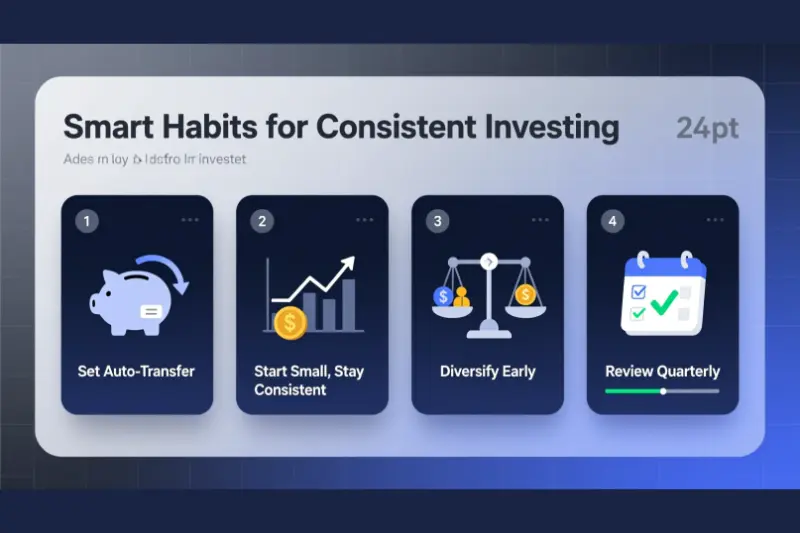
Investing wisely isn’t about luck or chasing the latest “hot stock.” It’s about building habits that make your money grow steadily over time. Two of the most powerful habits are dollar-cost averaging and making regular contributions.
Dollar-Cost Averaging
This is a fancy term for a simple idea: invest a fixed amount of money at regular intervals, regardless of market ups and downs. Over time, you buy more shares when prices are low and fewer when prices are high. This smooths out the impact of market fluctuations and reduces stress.
For example, if you invest $100 every month into a mutual fund, some months you buy more units when the price is low, and some months fewer units when the price is high. Over years, this approach can generate steady growth without you trying to “time the market.”
Regular Contributions vs One-Time Investments
Many beginners think they need a large lump sum to start. The truth is, small, consistent contributions often outperform one-time big investments in the long run.
Mini Example:
Two friends start investing at the same time. Person A invests $1,000 once and waits. Person B invests $50 every month for the next 20 years. In most cases, Person B ends up with more money because consistency and time in the market beat a one-time effort.
Key Insight:
By making investing a regular habit, you remove guesswork, reduce emotional decision-making, and let your money grow steadily. Consistency isn’t flashy, but it’s one of the most reliable ways to invest your money wisely.
May be you like it:
Top Finance Webinars to Boost Your Money Skills
My Funding Choice: Find the Best Way to Finance Your Goals
Wealth and Success – Habits That Transform Your Future
Invest Criteria: How to Choose Smart Investments
Avoid Common Investment Mistakes
Even experienced investors make mistakes -the key is learning from them so you can invest your money wisely without unnecessary setbacks. Most missteps come from emotional decisions, following trends blindly, or ignoring the hidden costs of investing.
Emotional Decisions
It’s easy to panic when the market dips or get overly excited when prices soar. Selling in fear or buying in hype can hurt your portfolio more than the market itself. Ask yourself: Am I making this choice logically, or am I reacting to fear or greed? Keeping emotions in check is essential for long-term growth.
Following Trends Blindly
Social media, friends, or news outlets can hype “the next big thing.” But just because everyone is investing in a stock or fund doesn’t mean it’s right for you. Blindly chasing trends can lead to losses and regret. Stick to your plan and invest in what aligns with your goals.
Ignoring Fees and Taxes
Even small fees or taxes can eat into your returns over time. Mutual fund management fees, brokerage charges, and capital gains taxes add up. A simple review of costs before investing can save you hundreds or thousands over the years.
Mini Real-Life Example:
I once knew someone who invested heavily in a trending stock because friends recommended it. They paid high trading fees and sold too soon out of panic. By contrast, another friend chose a low-fee mutual fund aligned with their goals and stayed consistent -and saw steady growth.
Avoiding these common mistakes isn’t complicated. It’s about planning, staying disciplined, and focusing on long-term results. This mindset is at the heart of investing your money wisely.
Leverage Technology Wisely
Technology has made investing your money wisely easier than ever. With apps, online platforms, and tracking tools, you can start investing with just a small amount, monitor your progress, and learn as you go.
Investment Apps and Tracking Tools
There are apps that let you invest in stocks, mutual funds, ETFs, or even fractional shares -all from your phone. Many apps allow automatic monthly contributions, portfolio tracking, and real-time market updates. This makes it easier to stay consistent, check performance, and adjust when necessary.
For example, some apps let you round up your everyday purchases and invest the spare change. Over time, these small investments add up, making it simple to start even with limited funds.
Cautions on Scams and Unverified Platforms
While technology opens opportunities, it also comes with risks. Avoid platforms that:
- Promise guaranteed high returns
- Aren’t regulated or widely trusted
- Encourage quick “get rich” schemes via social media or messaging apps
Real investors know that consistent, informed choices beat flashy promises. Always verify platforms, read reviews, and stick to regulated options to protect your money.
Mini Real-Life Insight:
A friend started using a popular investment app to automate her monthly mutual fund contributions. She monitored growth and made small adjustments as she learned more -all without feeling overwhelmed. Meanwhile, another acquaintance lost money on an unverified app that promised massive returns in weeks. Technology is powerful, but only when used wisely.
Leveraging technology smartly helps you invest your money wisely while saving time, reducing stress, and keeping your investments organized.
Monitor, Review, and Adjust Your Portfolio
Investing wisely doesn’t end once you put your money in. One of the most important habits for long-term success is regularly monitoring and reviewing your portfolio -without letting short-term market swings scare you.
Periodic Checks Without Overreacting
Checking your investments occasionally helps you understand growth, spot underperforming areas, and stay informed. But remember: markets naturally go up and down. Daily or weekly obsessing over every change can lead to panic decisions. A simple monthly or quarterly review is usually enough.
Rebalancing for Changing Goals
Your goals and life circumstances can change. Maybe you’re getting closer to retirement, or saving for a home, or your risk tolerance shifts over time. Rebalancing your portfolio means adjusting investments to reflect these changes. For instance:
If stocks have grown significantly and now make up too much of your portfolio, you might shift some into bonds or cash.
If your long-term goals allow for more growth, you might increase your allocation to stocks or ETFs.
Mini Real-Life Example:
I know an investor who ignored her portfolio for five years. When she finally checked, her allocation was heavily skewed toward one type of investment, exposing her to unnecessary risk. After rebalancing, she felt in control and ready for her long-term goals.
By monitoring wisely and rebalancing when needed, you keep your investments aligned with your objectives. This is a crucial step in investing your money wisely, ensuring your plan evolves with your life -not the market.
FAQs
What does it mean to invest my money wisely?
Investing your money wisely means making thoughtful choices that grow your wealth over time, match your goals, and fit your risk comfort level. It’s about planning, consistency, and avoiding emotional decisions.
How much money do I need to start investing?
You don’t need a huge sum to start. Even small, regular contributions in stocks, mutual funds, or ETFs can grow significantly over time thanks to compounding. Consistency matters more than size.
Should I invest in one type of investment or diversify?
Diversification is key. Spreading your money across stocks, bonds, mutual funds, or real estate reduces risk and balances growth. “Don’t put all your eggs in one basket” is a proven principle.
How do I decide my risk level?
Assess how comfortable you are with fluctuations in your portfolio. If market drops make you panic, choose safer investments like bonds. If you can handle ups and downs for long-term growth, you can include more stocks or ETFs.
How often should I check or adjust my investments?
Review your portfolio periodically, such as every 3–6 months, but avoid daily overchecking. Rebalance as needed to match your changing goals, risk tolerance, and life priorities.
Conclusion
Learning how to invest your money wisely isn’t about being perfect or having all the answers. It’s about understanding your options, setting clear goals, staying consistent, and making informed decisions over time.
Here are the key lessons to remember:
- Define your short-term and long-term goals before investing.
- Understand your risk tolerance and choose investments that match it.
- Diversify your portfolio to protect yourself from unexpected losses.
- Develop smart habits like regular contributions and dollar-cost averaging.
- Avoid common mistakes like emotional decisions, chasing trends, or ignoring fees.
- Use technology wisely, but stay cautious of scams or unverified platforms.
- Monitor, review, and rebalance your portfolio as your goals or circumstances change.
Actionable Step:
You don’t need a huge sum to start. Even a small, thoughtful investment today -combined with patience and consistency -can grow into significant wealth over time. Pick one type of investment, commit to a regular schedule, and stay the course.
Remember, the hardest part is often just starting. The sooner you begin, the sooner your money can start working for you. Take that first step today -your future self will thank you.
May be you like it:
Best Day Trading Setup – Simple Strategies That Work
Business Finance Definition Made Easy for Understanding Info
