

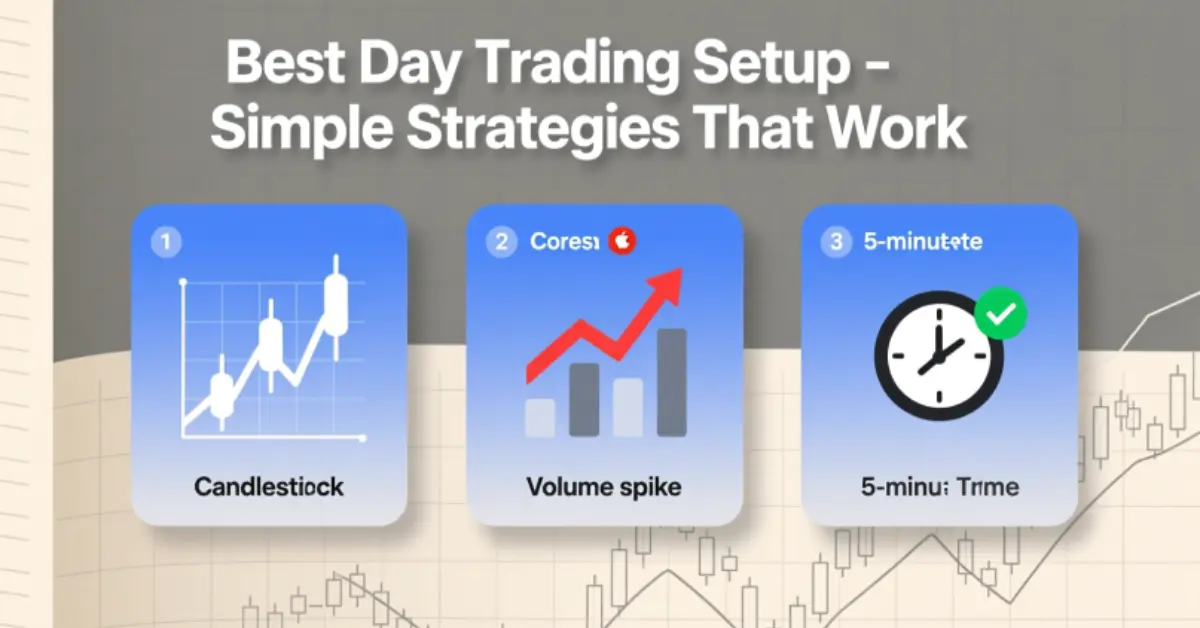
Introduction to Day Trading Setups
If you’re stepping into the world of day trading, the first thing you quickly realize is that luck isn’t going to carry you far. That’s where a solid day trading setup comes in. Think of it like building a small command center for your trades-it’s the combination of tools, charts, data, and rules that helps you make decisions confidently, even when the market gets unpredictable.
Having a proper setup matters because it reduces chaos. Without it, you might find yourself jumping between random charts, ignoring key signals, or making snap decisions that lead to losses. A good setup creates a rhythm-you know where to look, what to analyze, and how to act. It’s not about having the flashiest software or the most expensive tools; it’s about having the right environment that supports disciplined trading.
Consistency is another major benefit. When your setup is organized and repeatable, you’re not reinventing the wheel every day. You develop habits that improve decision-making over time. For example, knowing exactly which charts to monitor, which indicators to trust, and how to set stop-losses before entering a trade keeps your mind clear and your actions deliberate.
Mini reflection: Ask yourself-could you trade confidently in a high-volatility moment without a clear setup? If the answer is no, that’s exactly why building your day trading setup should be step one.
Table of Contents
Choosing the Right Broker and Trading Platform

One of the biggest mistakes new traders make is thinking that any broker will do. In reality, your broker and trading platform are the backbone of your day trading setup. If orders are slow to execute or fees eat into your profits, even the best strategies can fail. Execution speed matters-prices can move in seconds, and a delayed trade can turn a potential win into a loss before you even blink.
Low fees are equally important. Day trading often involves multiple trades in a single day, so commissions, spreads, or hidden fees can quietly chip away at your account. Think of it like this: making $50 on a trade only to give $10 back in fees several times a day quickly adds up. Choosing a broker with transparent, low-cost structures is not optional-it’s essential.
For beginners, demo accounts are a game-changer. They let you practice with live market conditions but without risking real money. It’s like taking a flight simulator before piloting a plane. You’ll learn the quirks of your platform, how to execute trades quickly, and test strategies in real-time-all while keeping your confidence intact.
Mini insight: Many traders underestimate the learning curve of a platform. Spending a week on a demo account can save months of mistakes later. It’s not just practice; it’s building muscle memory for your real trading setup.
May be you like it:
How Long Does It Take to Learn Day Trading Effectively?
Boost Your Career with an Online Accounting Diploma
Smart Strategies for Generational Wealth Management
What Is a Smart Investment – Simple Guide for Beginners
Essential Charting Tools & Indicators
Charts are the heart of any day trading setup. Without them, you’re essentially flying blind. But here’s the thing: more isn’t always better. Too many indicators can clutter your screen and make decisions harder, not easier. The key is to focus on a few essential tools that give you the clearest picture of the market.
- Candlestick charts are a must. They show price action in a way that’s easy to read at a glance, letting you spot trends, reversals, and patterns quickly. Unlike simple line charts, candlesticks reveal the story behind each price move-whether buyers or sellers are in control.
- Moving averages help you understand the market’s overall direction. A simple 20-period or 50-period moving average can act as a guide for when to enter or exit a trade. For example, if the price consistently bounces off the 50-period moving average, it can signal a reliable support or resistance level.
- Volume indicators are often overlooked but incredibly valuable. They confirm the strength behind a price move. A breakout with high volume is much more likely to sustain than one with weak volume. Think of it like cheering fans in a stadium-the louder the crowd, the more convincing the momentum.
Mini insight: Start simple. A clean chart with candlesticks, one moving average, and volume can give you 80% of the information you need. Avoid adding ten more indicators just because they’re “popular.” Complexity rarely beats clarity in day trading.
News Feeds & Market Data Integration
A strong day trading setup isn’t just about charts and indicators-it’s also about staying on top of real-time information. Markets react fast to news, and missing an important announcement can mean missed opportunities-or sudden losses. That’s why integrating reliable news feeds and market data into your setup is essential.
Tracking earnings reports, economic events, and breaking news gives you a head start on potential price movements. For instance, a company beating earnings expectations might trigger a rapid price surge, while a negative economic report can push an entire sector lower in minutes. Traders who have alerts set up for these events often gain the edge over those checking news manually.
News can create fast-moving opportunities, but it’s also a double-edged sword. Reacting impulsively without a strategy can lead to losses. A proper setup allows you to filter relevant news, interpret its impact quickly, and make informed decisions. Think of it like having a radar: it doesn’t control the storm, but it tells you when to steer and when to stay put.
Mini insight: Even seasoned traders keep a dedicated news tab or feed running alongside their charts. It’s not about obsessively watching every headline-it’s about having the right alerts that matter to your trades.
Risk Management Essentials
No matter how strong your day trading setup is, losses are part of the game. That’s why risk management is non-negotiable. Without it, even a small mistake can spiral into a big account hit. The goal isn’t to avoid losses entirely-it’s to manage them so they never threaten your trading career.
Stop-loss placement is one of the simplest but most effective tools. By deciding in advance where you’ll exit a losing trade, you protect yourself from emotional reactions when the market moves against you. For example, if you buy a stock at $50 and set a stop-loss at $48, you’ve defined your maximum loss before the trade even starts. This turns uncertainty into a controlled decision.
Position sizing is equally critical. Many traders lose more from risking too much on a single trade than from market moves. A common rule is to risk only 1–2% of your account on each trade. This way, even a string of losses won’t derail your progress.
Managing emotional risk is just as important as technical risk. Overtrading or chasing losses is a common trap. Your day trading setup should include routines that keep you disciplined: scheduled breaks, pre-defined trade limits, and realistic daily goals. Ask yourself: am I trading this setup, or is the setup trading me?
Mini insight: Some of the most successful traders will tell you that learning to lose small-and consistently-is what eventually allows you to win big. It’s not about avoiding losses; it’s about surviving them smartly.
Optimizing Your Physical and Digital Workspace
A strong day trading setup isn’t just about software-it’s also about your environment. How you arrange your screens, seating, and workspace can directly impact your focus, speed, and overall performance. Think of it as creating a cockpit for trading: everything you need should be within easy reach, and distractions should be minimized.
For many traders, a multi-monitor layout is ideal. One screen can show charts, another your broker platform, and a third your news feed or economic calendar. This setup allows you to monitor multiple data points at a glance without constantly switching windows. But if you’re limited to a single screen, you can still trade efficiently by organizing tabs and using hotkeys for quick navigation. The goal is clarity, not clutter.
Ergonomics and comfort are often underestimated. Poor posture, bad lighting, or eye strain can wear you down during long trading sessions, leading to mistakes. Invest in a good chair, position monitors at eye level, and ensure lighting doesn’t create glare. Even small adjustments, like keeping your keyboard and mouse at a comfortable angle, can reduce fatigue and improve your decision-making.
Mini insight: Many traders underestimate the mental benefit of a clean workspace. Fewer distractions = quicker reactions. Simple things like noise-canceling headphones or a tidy desk can actually help you spot trading opportunities faster.
Simple Day Trading Strategies
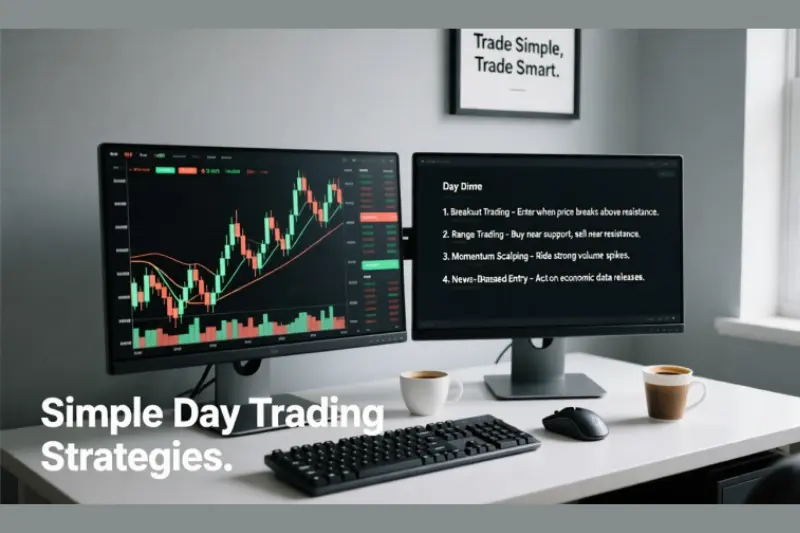
Once your day trading setup is ready, having a few straightforward strategies can make all the difference. Complex systems might look impressive, but simple, disciplined approaches often outperform overcomplicated ones. Let’s break down three beginner-friendly strategies:
Breakout Trading
Breakout trading involves entering a trade when the price moves beyond a key support or resistance level. The idea is to ride the momentum as other traders jump in. For example, imagine a stock has been stuck around $50 for hours. Suddenly, it jumps past $51 with high volume-that’s a classic breakout signal. With a proper setup, you spot the move, confirm momentum, and enter while setting a stop-loss just below $51.
Momentum Trading
Momentum traders look for assets moving strongly in one direction and join the trend. The key is to get in early and exit when momentum fades. For instance, if a stock is rapidly rising after a positive earnings report, you might ride that momentum for a few percent gain-but you exit before the surge slows. Momentum trading is about reading the flow and not overthinking every candle.
Scalping
Scalping is all about taking small, quick profits from minor price fluctuations. It requires a responsive day trading setup and tight risk management. Picture buying a stock at $50.10 and selling it at $50.25 multiple times a day-those tiny gains add up if done consistently. Scalping demands focus, quick execution, and low-fee brokers.
Mini insight: These strategies aren’t about hitting the jackpot on a single trade-they’re about consistency and disciplined execution. Ask yourself: which of these fits your personality and attention span? Not every strategy works for every trader, and that’s okay.
May be you like it:
Free Trading Webinar: Learn Smart Market Strategies
Certificate in Business Management Online: Your Career Boost
Smart Generational Wealth Planning for Lasting Legacy
Top Personal Investment Company Tips for Smart Investors
Timeframes and Chart Selection
Choosing the right timeframe is a crucial part of any day trading setup. The chart you use can completely change how you interpret price action, and matching it to your strategy is key to making consistent decisions.
1-minute, 5-minute, and 15-minute charts are the most common for intraday trading. A 1-minute chart shows rapid price movements, which is perfect for scalping or spotting ultra-short-term opportunities. A 5-minute chart gives a broader perspective while still capturing intraday trends-ideal for momentum or breakout trades. The 15-minute chart is slower but helps filter out noise and gives a clearer view of the bigger intraday picture.
Matching the chart to your strategy matters. For example, if you’re scalping small price movements, staring at a 15-minute chart could make you miss crucial entry points. Conversely, if you focus solely on 1-minute charts for longer breakout trades, you may get whipsawed by minor fluctuations. The key is balance-use the timeframe that aligns with your trade plan, and always cross-reference higher timeframes to confirm trends.
Mini insight: Many traders set up multiple charts side by side-like a 1-minute chart for entries, a 5-minute for trends, and a 15-minute for context. It might seem complicated at first, but it quickly becomes second nature once your day trading setup is organized efficiently.
Psychology and Discipline in Day Trading

A strong day trading setup can give you all the tools you need, but without the right mindset, it won’t take you far. Psychology is often the silent difference between consistent profits and repeated mistakes.
Consistency starts with discipline. Stick to your trading plan, follow your rules, and don’t chase trades because you “feel lucky.” One of the most common pitfalls is impulsive trading-entering a position without proper analysis or confirmation. Over time, these small mistakes add up and can erase gains quickly.
Another trap is revenge trading, which happens after a loss when traders try to “win it back” immediately. It’s almost always a recipe for further losses. Instead, take a pause, review what went wrong, and make your next trade with a clear head.
Mini insight: Ask yourself after each session: “Did I trade according to my setup, or did emotions drive me?” Over time, tracking your behavior is just as important as tracking charts. Many successful traders keep a simple journal to record decisions, mistakes, and feelings-it’s a powerful tool for developing discipline.
Remember, trading isn’t just about strategy-it’s about building habits, managing emotions, and staying calm under pressure. Your day trading setup supports you technically, but your mindset is what keeps it effective.
Continuous Improvement & Setup Refinement
A day trading setup is never truly “finished.” Markets evolve, strategies shift, and what works today might need tweaks tomorrow. The most successful traders treat their setups like a living system-constantly reviewing, adjusting, and improving.
Reviewing trades is the first step. After each session, ask yourself: Did I follow my plan? Did my setup help me spot opportunities quickly? Did I manage risk effectively? Even small insights-like noticing you missed a breakout because your charts weren’t arranged efficiently-can lead to meaningful adjustments.
Learning from mistakes is just as important as celebrating wins. Every loss is an opportunity to refine your approach. Maybe your stop-losses were too tight, or maybe you entered trades without confirming volume or momentum. By identifying these patterns, you evolve your strategy and make your day trading setup more robust.
Mini insight: Keep a simple log of trades, decisions, and reflections. Over time, you’ll see trends in your behavior and performance that no single chart or indicator can reveal. This is how trading transforms from guesswork into a disciplined craft.
Remember: trading is a journey. A flexible, well-reviewed setup, combined with consistent learning, gives you the best chance to grow your skills and maintain control in the fast-paced world of day trading.
FAQs
What is a day trading setup?
A day trading setup is the combination of tools, charts, platforms, and routines a trader uses to analyze markets, execute trades, and manage risk efficiently. It’s like your personal trading command center.
Which tools are essential for a day trading setup?
At a minimum: a reliable broker platform, candlestick charts, moving averages, volume indicators, and a real-time news feed. Keeping it simple is better than overloading your screen.
Why is risk management so important?
Even the best strategies can fail sometimes. Stop-losses, proper position sizing, and emotional discipline protect your account from large losses and help you trade consistently.
Can I day trade effectively on a single screen?
Yes. While multi-monitor setups help, you can organize charts, news, and broker platforms efficiently on one screen using tabs and hotkeys. The key is clarity and quick access.
How do I improve my day trading setup over time?
Regularly review trades, track mistakes and successes, adjust charts and indicators, and refine strategies. Continuous learning and reflection are essential for long-term growth.
Conclusion
Building a strong day trading setup is more than just arranging charts and indicators-it’s about creating a system that supports disciplined decision-making, consistent execution, and continuous learning. From choosing the right broker to managing risk, selecting the right timeframes, and refining your strategies over time, every element plays a role in your trading success.
Remember, trading isn’t about perfection or hitting a jackpot on every trade. It’s about creating habits, sticking to a plan, and learning from both wins and losses. Ask yourself after each session: “Did my setup help me make smarter decisions today?” Over time, these small improvements compound into real skill, confidence, and results.
May be you like it:
Stock Market for Beginners PDF – Your Simple Starter Guide
Top MBA Certificate Programs Online for Career Growth
