


Introduction to the Stock Market for Beginners
If you’ve ever felt curious about investing but overwhelmed by charts, numbers, and endless jargon, you’re not alone. The stock market can seem like a maze at first, but understanding its basics is more important than most people realize. Learning even a little about how it works can help you make smarter decisions, protect your money, and spot opportunities you might otherwise miss.
This is exactly where a Stock Market for Beginners PDF comes in. Think of it as a friendly guide that breaks down complicated concepts into bite-sized lessons. Instead of flipping through dense textbooks or scrolling endless blogs, a good PDF gives you a clear path – from understanding what stocks are, to how prices move, and even simple strategies for getting started.
For many beginners, having a single, reliable resource feels like a safety net. You can learn at your own pace, revisit tricky concepts, and start building confidence before risking any real money. It’s like having a mentor in your pocket, ready whenever curiosity strikes.
Have you ever wished there was a simple map to navigate investing? That’s exactly the kind of clarity a beginner-friendly PDF provides – a practical, easy-to-follow starting point for your stock market journey.
Table of Contents
What a Stock Market PDF Includes
A Stock Market for Beginners PDF isn’t just a bunch of pages with definitions – it’s a carefully structured guide designed to make investing approachable. Most beginner-friendly PDFs break the information into clear sections, so you don’t feel lost in a sea of financial jargon.
Typically, you’ll find sections covering:
- Stock Market Basics: Simple explanations of what stocks are, how the market works, and why prices fluctuate.
- Types of Investments: A clear comparison between stocks, bonds, ETFs, and mutual funds, often with examples that show how each works in real life.
- Investment Strategies: Step-by-step beginner strategies, like long-term investing or dollar-cost averaging, presented in plain language without overwhelming charts or formulas.
What makes these PDFs particularly effective is how they present information. Instead of walls of text, many include visuals, bullet points, mini case studies, or checklists. This makes learning digestible and keeps you engaged, even if finance isn’t your strong suit.
Think of it like assembling a puzzle: each section gives you a piece of the bigger picture. By the time you finish the PDF, you not only understand the parts of the stock market but also how they connect – all without feeling intimidated.
Understanding Stock Market Basics

Before you dive into investing, it’s important to grasp the core building blocks of the stock market. A Stock Market for Beginners PDF usually starts here, explaining key concepts in a way that even complete newcomers can understand.
- Stocks and Shares: At its simplest, owning a stock means owning a piece of a company. Think of it like owning a slice of pizza – the more slices you have, the bigger your piece of the whole. When the company does well, the value of your slice can increase.
- Stock Exchanges: These are marketplaces where stocks are bought and sold, like a digital farmers’ market for shares. Big exchanges like the NYSE or Nasdaq connect buyers and sellers so trading can happen smoothly.
- Price Movements: Stock prices go up and down based on supply, demand, and company performance. Imagine a popular concert: ticket prices rise as more people want in, but if the hype dies down, prices drop. Stocks behave in a similar way, reacting to investor sentiment, news, and financial results.
The beauty of a good beginner PDF is how it uses these simple analogies to make abstract concepts tangible. Instead of overwhelming you with formulas or confusing graphs, it provides real-world comparisons you can visualize, making it much easier to remember and apply the knowledge.
Have you ever thought about how owning a small piece of your favorite company could actually make you a part of its story? That’s exactly what understanding these basics opens the door to.
May be you like it:
Top 10 Best Trading YouTube Channels to Follow in 2025
Funding an LLC: Easy Ways to Get Startup Money
Family Wealth Strategy – Build and Protect Your Legacy
Invest Wisely: Smart Tips for Growing Your Money
Different Types of Investments
Once you understand the basics, the next step in your Stock Market for Beginners PDF is usually learning about the different types of investments. Not every investment is the same, and knowing the differences helps you choose what fits your goals and comfort level.
Stocks
Buying a stock means owning a small part of a company. Stocks can offer high returns if the company grows, but they’re also more volatile – prices can swing up or down quickly. Think of it like planting a fruit tree: it can grow big and strong, but it also needs care and patience.
ETFs (Exchange-Traded Funds)
ETFs are like baskets of stocks. Instead of picking individual companies, you buy a slice of the basket, which reduces risk. It’s a bit like joining a potluck instead of cooking an entire meal yourself – you get variety and shared responsibility.
Mutual Funds
Mutual funds pool money from many investors to invest in a mix of stocks, bonds, or other assets. They’re managed by professionals, which is helpful if you prefer a hands-off approach. The downside is management fees, which can eat into your returns over time.
Bonds
Bonds are loans you give to companies or governments in exchange for regular interest payments. They’re generally safer than stocks but usually offer lower returns. Imagine lending money to a friend who promises to pay you back with a little extra – that’s the basic idea.
A beginner-friendly PDF often lays these out side by side, comparing risks, returns, and examples. Seeing the pros and cons in one place makes it easier to understand how each investment works and which might suit your personal goals.
Have you thought about whether you prefer higher risk for potential higher rewards, or a steadier, slower growth approach? Knowing your comfort level is key before putting real money into any of these investments.
Risk and Reward in Investing
One of the most important lessons in any Stock Market for Beginners PDF is understanding the relationship between risk and reward. Investing isn’t just about picking the right stocks – it’s also about knowing how much uncertainty you’re comfortable with.
- Evaluating Risk for Beginners
Risk in investing simply means the possibility that your investment could lose value. As a beginner, it’s helpful to start with small amounts you can afford to lose while learning. Many beginner-friendly PDFs suggest creating a balance between higher-risk investments, like individual stocks, and lower-risk options, like bonds or ETFs. This way, you can grow your portfolio while keeping your financial safety net intact. - Emotional Aspects and Volatility
Investing isn’t just numbers; it’s also mental and emotional. Stock prices fluctuate constantly – sometimes wildly – and it’s easy to panic when you see a sudden drop. A well-designed PDF teaches beginners how to manage these emotions, emphasizing patience and long-term thinking. One simple tip: track your investments without obsessing over daily changes. Think of it like tending a garden – you don’t water it every hour; you check it regularly and trust the process.
By learning to evaluate risk and prepare emotionally, you’ll build confidence in your investing decisions. The right beginner PDF doesn’t just explain concepts – it gives you practical tools to act calmly and wisely, even when the market gets bumpy.
Here’s a reflective question: How much fluctuation in your investments could you handle without losing sleep? Knowing this can help you choose investments that fit your comfort level and long-term goals.
Step-by-Step Guide to Start Investing
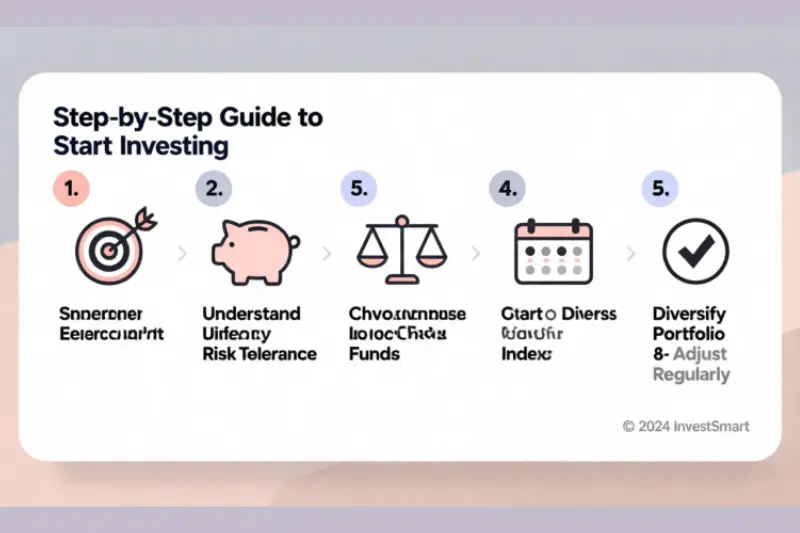
After understanding the basics, types of investments, and managing risk, the next natural step in your Stock Market for Beginners PDF is learning how to actually start investing. This part turns theory into action, helping beginners take their first confident steps.
- Opening a Brokerage Account
Before you can buy any stocks or ETFs, you need a brokerage account. Think of it as your entry ticket to the market. Many beginner-friendly PDFs walk you through choosing a reputable platform, completing the application, and understanding account types (like individual or retirement accounts). Some even include screenshots to make the process feel familiar and approachable. - Setting a Budget and Making Your First Investment
Deciding how much to invest is crucial. Start with an amount you’re comfortable with – even a small sum can teach you valuable lessons without high risk. Your first purchase could be a single stock, an ETF, or a mutual fund, depending on your goals. Beginner PDFs often suggest starting slowly and gradually increasing your investment as confidence and understanding grow.
Tips for Beginners
- Start Small: Use a small portion of your savings to experiment while learning.
- Diversify Early: Spread your investments across a few options to reduce risk.
- Track, Don’t Obsess: Check your portfolio regularly but avoid reacting to every market swing.
- Keep Learning: Use your PDF and other credible resources to deepen your knowledge over time.
Starting to invest can feel intimidating, but following a step-by-step approach makes it manageable. Imagine learning to ride a bike: you start with training wheels, gain balance, and gradually pedal on your own. That’s exactly the mindset a beginner-friendly PDF encourages.
May be you like it:
Top Finance Webinars to Boost Your Money Skills
My Funding Choice: Find the Best Way to Finance Your Goals
Wealth and Success – Habits That Transform Your Future
Invest Criteria: How to Choose Smart Investments
Practical Examples and Mini Case Studies
One of the most valuable parts of a Stock Market for Beginners PDF is seeing theory applied in real-world situations. Concepts like stocks, ETFs, and risk can feel abstract until you see how they play out in actual scenarios.
- Real-World Beginner Investments
Many beginners start with small, well-known companies or diversified ETFs. For example, imagine someone buys $100 of a tech ETF. Over a year, the ETF gains 8%, giving them $8 in profit. While it’s not a fortune, it demonstrates growth and introduces them to the experience of investing without overwhelming risk. - Illustrative Simple Trades
Another example could be buying a few shares of a favorite brand. Let’s say you buy 5 shares of a company that makes a popular product you use daily. If the stock rises 10%, you see your small investment grow, and more importantly, you learn how market news and company performance affect prices. These mini case studies help beginners connect the dots between market movements and their own decisions.
A good beginner-friendly PDF often includes multiple examples like these, sometimes with step-by-step explanations or “what-if” scenarios. This approach turns abstract numbers into relatable experiences, making it easier for new investors to understand both the process and the potential outcomes.
Here’s a reflective thought: Which company or fund would you feel comfortable experimenting with first, knowing it’s a learning experience more than a money-making mission? Thinking this way helps set realistic expectations while building confidence.
How to Use the Stock Market PDF Effectively
Reading a Stock Market for Beginners PDF is only the first step. The real value comes when you actively apply what you learn. A PDF can provide all the knowledge in the world, but if it sits unopened after the first read, it won’t help you make smarter investing decisions.
- Take Notes
As you read, jot down key points, definitions, and strategies that resonate with you. Writing things down helps your brain retain information and makes it easier to revisit later. Highlight examples or tips that feel immediately practical – these will serve as your personal guide as you start investing. - Revisit Concepts Regularly
The stock market can be complex, and it’s normal to forget details. Re-reading sections of your PDF reinforces learning and keeps foundational concepts fresh. Treat it like reviewing a map before a journey: the more familiar you are with the route, the more confident you’ll feel navigating it. - Practice with Virtual Accounts
Many beginner-friendly PDFs suggest using demo accounts or virtual trading platforms. This allows you to “trade” without risking real money. You’ll learn how orders work, how the market reacts, and even how it feels emotionally to watch gains and losses – all in a safe environment. - Apply Knowledge Practically
Start small. Choose one or two investments to try in a real account while keeping most of your portfolio in low-risk options. Use your PDF as a reference for decision-making, evaluating each step critically. Over time, these small, practical actions build confidence and reinforce the lessons you’ve learned.
Reflective question: Which section of your Stock Market for Beginners PDF do you think you’ll apply first, and how will you test it in real life? Answering this helps turn reading into action, the key to becoming a confident investor.
Finding Reliable Beginner-Friendly PDFs

Not all resources labeled as a Stock Market for Beginners PDF are created equal. Some are outdated, overly simplified, or even misleading. As a beginner, it’s important to know how to identify trustworthy guides that will genuinely help you learn and make informed decisions.
- Check for Credibility
Look for PDFs produced by reputable sources: financial institutions, well-known educational platforms, or experienced investors with a proven track record. A credible PDF usually includes author credentials, references, or links to official data – all of which add authority to the information. - Ensure It’s Up-to-Date
The stock market changes constantly, from new regulations to evolving investment products. A beginner-friendly PDF should reflect recent data and market trends. Outdated advice can lead to mistakes, like ignoring new tax rules or investment options that didn’t exist when the PDF was first written. - Look for Clear Examples
The best PDFs don’t just define terms; they show them in action. Step-by-step examples, mini case studies, or practical scenarios help beginners connect theory to reality. Visuals, charts, and checklists make learning easier and more engaging. - Avoid Misleading Resources
Steer clear of PDFs promising “get rich quick” schemes or guaranteed returns. If something sounds too good to be true, it probably is. A reliable beginner PDF focuses on foundational knowledge, realistic expectations, and actionable guidance.
By carefully selecting the right PDF, you’ll save time, avoid frustration, and build a strong foundation in investing. A high-quality guide is like having a mentor who walks with you, step by step, through the complexities of the stock market.
Summary and Next Steps for Beginners
By now, you’ve explored the essentials of a Stock Market for Beginners PDF, from understanding the basics to exploring different types of investments, managing risk, and even applying your knowledge practically. Let’s recap the key takeaways:
- Start with the basics: Learn what stocks, ETFs, bonds, and mutual funds are, and how they work.
- Understand risk and reward: Know your comfort level and plan for volatility.
- Use practical tools: Take notes, revisit concepts, and try virtual trading before using real money.
- Choose reliable resources: Select PDFs from credible sources with clear examples and up-to-date information.
The most important next step? Start small and keep learning. You don’t need to invest a fortune on day one. Even small, intentional steps will teach you valuable lessons and gradually build confidence. Remember, investing is a journey, not a sprint.
Reflective questions to guide your first investments:
- Which type of investment feels most comfortable for your first trial?
- How much are you willing to invest initially without stress?
- What strategies from your PDF can you apply immediately to start learning hands-on?
By approaching investing thoughtfully and using a well-designed beginner-friendly PDF, you’re setting yourself up for long-term growth – not just financially, but in knowledge, confidence, and decision-making skills.
FAQs
What is a Stock Market for Beginners PDF?
It’s a simple, beginner-friendly guide that explains how the stock market works, types of investments, and basic strategies for starting your investing journey.
Who can benefit from a beginner stock market PDF?
Anyone new to investing – students, young professionals, or anyone curious about growing their money – can use it to understand the fundamentals without feeling overwhelmed.
Are these PDFs free?
Many are free, but some comprehensive guides may cost a small fee. Free PDFs can still offer valuable basics, while paid versions often include extra examples, exercises, and strategies.
How do I apply what I learn from the PDF?
Take notes, revisit concepts, use virtual trading accounts, and start small with real investments. Practical application is key to turning knowledge into confidence.
How do I choose a reliable PDF?
Look for credibility, recent updates, clear examples, and guidance from reputable financial educators or institutions. Avoid PDFs promising “get rich quick” results.
Conclusion
Starting your investing journey can feel overwhelming, but a Stock Market for Beginners PDF makes it approachable and practical. It breaks down complex concepts, offers real-world examples, and guides you step by step so you can learn at your own pace.
Remember, the key is to start small, focus on understanding rather than rushing for profits, and use reliable resources that teach both the “how” and the “why” of investing. Over time, these small, informed steps build confidence and set you up for smarter decisions in the market.
Think of your first PDF as a mentor in your pocket – one that helps you navigate, experiment safely, and grow as an investor. The most important thing? Keep learning, stay curious, and take those first small steps today.
May be you like it:
Best Day Trading Setup – Simple Strategies That Work
Business Finance Definition Made Easy for Understanding Info
