

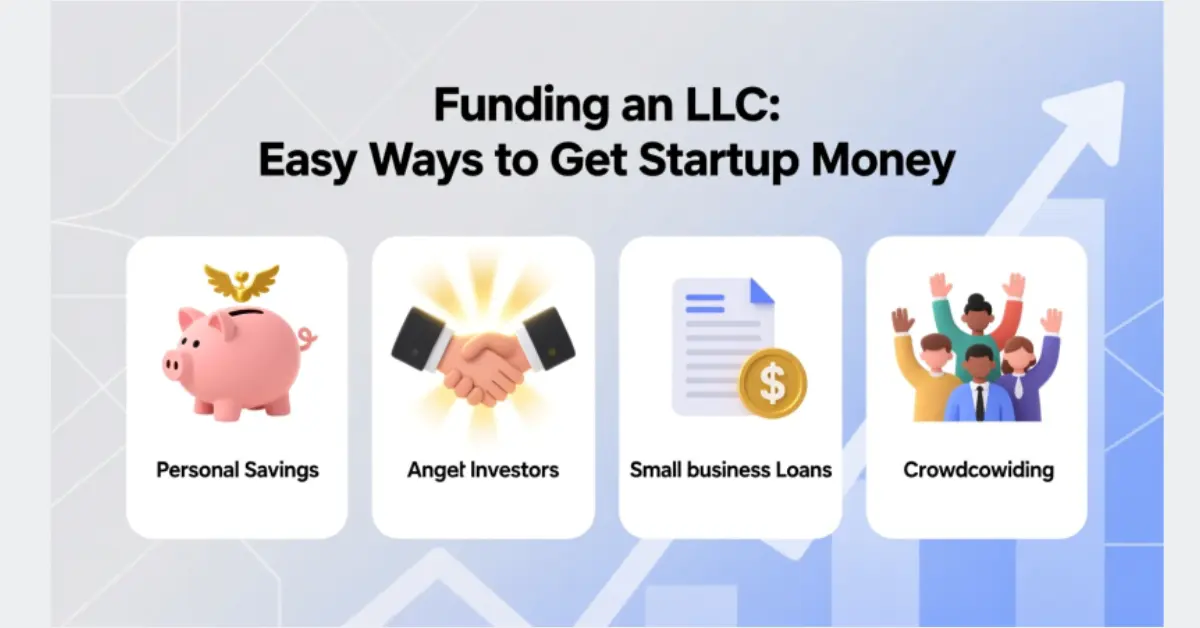
Introduction:
Starting an LLC is exciting -you’ve got your idea, a name in mind, maybe even a rough logo. But then reality hits: how are you actually going to pay for it?
Funding an LLC is more than just numbers. It’s the lifeline that turns your idea into something real. Without money, even the best ideas stall before they begin. You need funds for essentials like registering your LLC, buying equipment, marketing your services, and covering day-to-day expenses while your business gets off the ground.
Think of it like building a house. You can sketch the design all day, but without bricks, mortar, and tools, it’ll never stand. Funding your LLC is the foundation that allows your business to grow safely and sustainably.
Quick reflection: If you had to start tomorrow, do you know exactly what costs you’d face? Knowing that number helps you choose the right funding path.
Table of Contents
What Does “Funding an LLC” Mean?
When people talk about funding an LLC, they simply mean finding the money you need to start and run your business. It’s the cash that covers everything from legal fees to the small daily expenses that keep your LLC alive during those first, uncertain months.
Typical costs vary depending on the type of business, but here’s a rough idea:
- Legal and registration fees: $50–$500, depending on your state
- Business licenses or permits: $50–$400
- Equipment or tools: $500–$5,000
- Marketing and website setup: $200–$2,000
- Rent or workspace (if needed): $500–$3,000
- Initial inventory or supplies: $500–$10,000
Some businesses can get started for a few hundred dollars, while others may need tens of thousands. The key is knowing your numbers before looking for funding -otherwise, you might borrow too little or too much.
Quick reflection for you: If you were to list every must-have expense for your LLC, what would your startup cost total? Even a rough estimate makes the next steps much clearer.
Self-Funding (Bootstrapping)
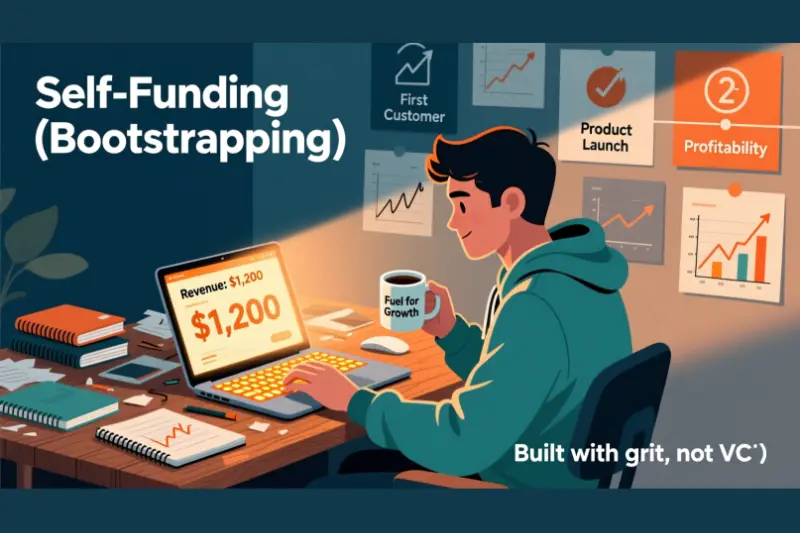
One of the most common ways to start an LLC is self-funding, also called bootstrapping. This simply means using your own savings or personal resources to get your business off the ground. It’s straightforward -no banks, no investors, no complicated applications — just you and your money.
Real-life examples:
- A freelance designer invests $2,000 in a laptop, software, and a small marketing push to attract clients.
- A small local landscaping business uses personal savings to buy basic tools and a truck.
- An online seller starts by using a portion of their paycheck to buy initial inventory.
Pros of self-funding:
- You keep full control of your LLC.
- No debt or monthly repayments.
- You can move quickly without waiting for approvals.
Cons:
- Your personal savings are at risk.
- Growth may be slower since you’re limited by your own funds.
- Mistakes can hit you harder financially.
Tips to manage risk:
- Set a clear budget: decide how much of your personal money is safe to invest.
- Track every expense carefully.
- Start small, test your idea, and scale gradually.
Bootstrapping works best when you’re willing to be disciplined and creative. Think of it like planting a seed -it may take time, but it grows without giving away any of your control.
May be you like it:
How Long Does It Take to Learn Day Trading Effectively?
Boost Your Career with an Online Accounting Diploma
Smart Strategies for Generational Wealth Management
What Is a Smart Investment – Simple Guide for Beginners
Friends and Family Support
Sometimes, the first people who believe in your idea are the ones closest to you. Friends and family funding can be a helpful way to raise money for your LLC, but it comes with unique risks.
You might get:
- A small loan with little or no interest
- A direct investment for a percentage of your business
- Non-monetary support, like tools, workspace, or expertise
Risks to keep in mind:
- Money can strain relationships if expectations aren’t clear
- Informal agreements may lead to misunderstandings
- Failure to repay or deliver can hurt trust permanently
Best practices:
- Put agreements in writing, even if it’s simple
- Clearly outline repayment terms or investment expectations
- Be honest about the risks -don’t sugarcoat your chances
Mini example:
Jake borrowed $3,000 from a cousin to start a small catering business. They drafted a simple agreement stating that Jake would pay back $500 per month until it was fully repaid. Clear terms kept the relationship healthy and the business on track.
A small reminder: just because it’s family or friends doesn’t mean it’s risk-free. Treat it like any professional funding arrangement, and you’ll save both money and relationships.
Bank Loans and Credit Options
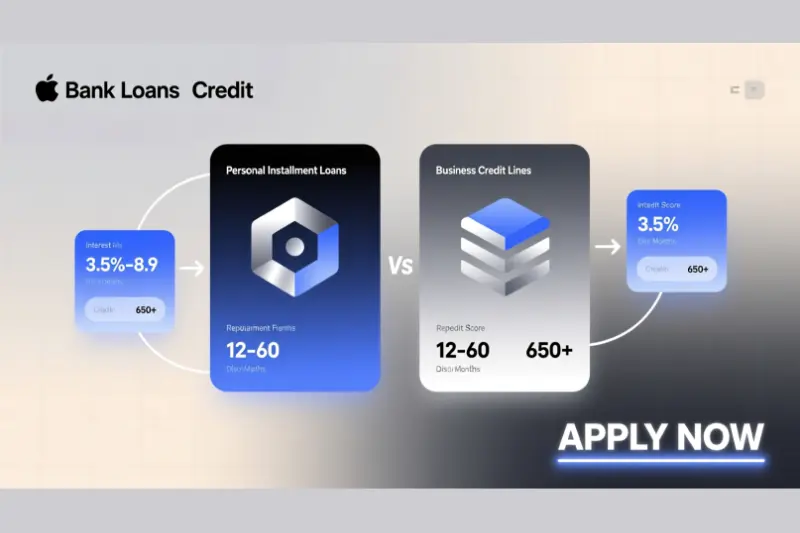
For many LLC owners, traditional bank loans or lines of credit are a go-to funding option. Banks can provide the cash you need upfront, but they do expect repayment — usually with interest.
Requirements you’ll typically need:
- A solid business plan showing how you’ll use the money
- Good personal or business credit history
- Proof of income or collateral
- Sometimes, a few years of business experience
Advantages:
- Access to larger amounts of money than personal savings
- Fixed repayment schedules help with planning
- Can build your business credit for future funding
Drawbacks:
- Approval isn’t guaranteed, especially for new LLCs
- Monthly payments start immediately, which can strain cash flow
- Interest increases the overall cost
Practical tip for approval success:
Keep your business plan clear and realistic. Include expected revenue, expenses, and a repayment plan. Even a small, well-organized plan shows the bank that you’re serious and reduces their risk.
Think of a bank loan as a tool -it can accelerate your business, but only if you use it wisely. Misstep here, and it can quickly become a heavy burden rather than a stepping stone.
Small Business Grants
One of the most exciting ways to fund an LLC is through small business grants — essentially, free money that doesn’t need to be repaid. Unlike loans, grants give you cash to grow your business without interest or debt, which makes them incredibly appealing.
Who qualifies for grants?
- Women-owned, minority-owned, or veteran-owned businesses
- Startups in tech, education, or green initiatives
- Local businesses that benefit the community
- Creative projects or innovative products
Where to look:
- Government websites and small business offices
- Non-profit organizations and industry associations
- Startup accelerators or community programs
Keep in mind: competition can be fierce. Many people apply, and grants are limited. But even applying teaches you how to pitch your business clearly -which is valuable for future funding opportunities too.
Mini tip: Explore niche grants for your specific industry. For example, a small bakery might find a local food innovation grant, while a tech startup could qualify for a state-level innovation program. Sometimes, these smaller, targeted grants are easier to win than large national ones.
Grants aren’t guaranteed, but they’re worth the effort -free funding is always better than borrowed money if you can get it.
May be you like it:
Free Trading Webinar: Learn Smart Market Strategies
Certificate in Business Management Online: Your Career Boost
Smart Generational Wealth Planning for Lasting Legacy
Top Personal Investment Company Tips for Smart Investors
Crowdfunding
Crowdfunding is a modern way to raise money for your LLC by letting the public back your idea. Platforms like Kickstarter, GoFundMe, or Indiegogo let people contribute small amounts in exchange for rewards — like early access to a product, special discounts, or just the satisfaction of supporting your vision.
When crowdfunding works best:
- Your idea is easy to understand and visually appealing
- You can show people exactly what they’re supporting
- You have a personal story or mission that connects emotionally
- You’re willing to put effort into marketing your campaign
Tips for telling a compelling story:
- Focus on the why: Why does your business exist, and why does it matter?
- Show, don’t just tell: Use images, videos, or prototypes
- Offer clear, enticing rewards that make contributors feel part of the journey
- Share updates and progress -people love seeing growth and effort
Think of crowdfunding as more than just raising money. It’s also a way to test your market, build an early customer base, and get feedback before fully launching.
Quick reflection: Could you explain your LLC idea in one clear, exciting paragraph that makes someone want to support it today? If not, your story might need a little more polish before launching a campaign.
Angel Investors
If your LLC has big growth potential, angel investors might be the right funding option. These are individuals who invest their own money in early-stage businesses, often in exchange for a small ownership stake. Unlike crowdfunding or loans, angels can also offer mentorship, industry connections, and advice — which can be just as valuable as the cash.
When to seek angel investors:
- Your business is scalable and has potential for fast growth
- You’ve validated your idea and have some traction
- You’re ready to give up a small part of ownership for support
What investors look for:
- A passionate, committed founder
- Clear understanding of your market and competition
- A plan for how their money will be used to generate growth
- Proof of demand or early results
Realistic expectations for new LLCs:
- Angel investors are selective; not every idea will attract them
- They usually want to see potential for significant returns
- Accepting investment means sharing control, so it’s not ideal for every founder
A simple tip: Start networking early. Attend startup events, connect on LinkedIn, and build relationships before you even ask for money. Often, angels invest in people they trust, not just ideas.
Combining Funding Sources
Most successful LLCs don’t rely on just one funding method. Instead, founders mix self-funding, loans, grants, crowdfunding, and even angel investments to cover startup costs while balancing risk and control.
Practical examples:
- Sarah wanted to start an online clothing brand:
- $3,000 from personal savings
- $1,000 from a small local grant
- $2,000 from crowdfunding
- Total startup funding: $6,000 with no heavy debt
Mike, a small landscaping business owner:
- $5,000 personal savings
- $10,000 small bank loan
- Total: $15,000 to buy equipment and cover initial payroll
Why combining works:
- Limits risk from any single source
- Keeps some ownership and control
- Lets you test different funding strategies without overcommitting
The key is finding the right balance between risk and control. Too much borrowed money increases stress and pressure, while relying only on personal funds can slow growth. Mixing sources gives flexibility, stability, and room to adapt as your LLC grows.
FAQs
What is the easiest way to fund an LLC when starting small?
Using personal savings, also called bootstrapping, is often the easiest way. It gives you full control, avoids debt, and allows you to test your business idea with minimal risk.
Can I get money for my LLC from friends and family?
Yes, friends and family can provide loans, investments, or in-kind support. Always put agreements in writing and be honest about risks to protect both your relationships and your business.
Are bank loans a good option for funding an LLC?
Bank loans work well if you have a solid business plan, good credit, and clear repayment ability. They provide larger funding amounts but come with monthly payments and interest.
How can small business grants help my LLC?
Grants provide free money that doesn’t need repayment. Many target women-owned, minority-owned, or community-focused businesses. While competitive, they’re worth applying for because they reduce financial risk.
Should I combine different funding sources for my LLC?
Yes, mixing personal savings, loans, grants, crowdfunding, and angel investments balances risk and control. Combining sources lets you start with enough capital without over-relying on any one option.
Practical Tips and Common Mistakes
Funding an LLC isn’t just about getting money — it’s about using it wisely. Small missteps early on can cost time, stress, and even relationships. Here are some practical tips to keep your business on track:
Track every expense
Open a separate business bank account and record all transactions. Mixing personal and business money is a common mistake that makes accounting messy and can hurt your credibility with lenders or investors.
Avoid overfunding or misusing money
Don’t borrow or raise more than you actually need. Extra funds can tempt unnecessary spending on things that don’t help your business grow. Start with essentials, then scale as revenue allows.
Mindset matters
Confidence comes from preparation. Know your numbers, understand your options, and be realistic about what your LLC can handle. A clear plan makes every funding decision easier.
Reflective questions to guide action:
- Have I listed all must-have and nice-to-have expenses for my LLC?
- Am I comfortable with the level of risk I’m taking?
- Do I understand the terms of every loan, grant, or investment I consider?
- Remember, funding is a tool -not the goal. Smart, disciplined use of money sets the foundation for your LLC to thrive.
May be you like it:
Stock Market for Beginners PDF – Your Simple Starter Guide
Top MBA Certificate Programs Online for Career Growth
