

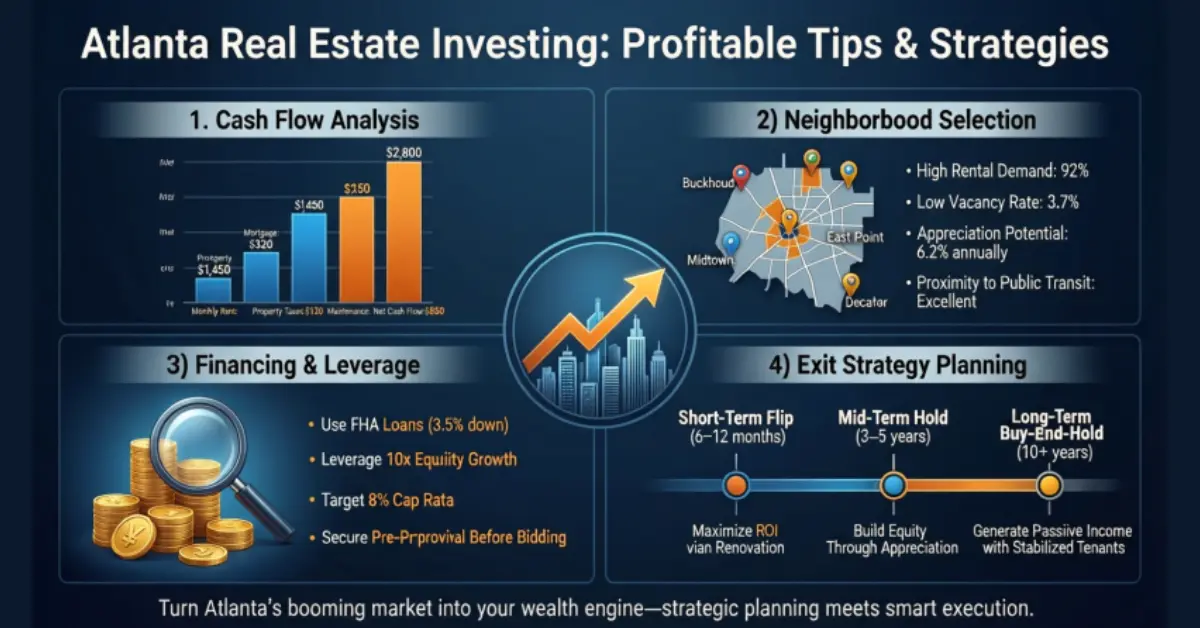
Introduction
If you’re thinking about real estate investing, Atlanta Real Estate Investing is one of those cities that makes you stop and take notice. With its mix of economic growth, diverse neighborhoods, and a steady influx of new residents, the city has become a hotspot for both beginners and seasoned investors.
So, why is Atlanta such a prime market for investors? For starters, it’s not just the capital of Georgia-it’s a hub for business, culture, and innovation. Big corporations, growing startups, and a vibrant film industry keep the job market strong, which directly drives demand for housing. More people moving in means more tenants and buyers looking for properties, and that’s exactly what every real estate investor wants.
The opportunities here aren’t limited to one type of property either. Whether you’re considering rental homes, multi-family units, or house flipping projects, Atlanta offers a range of options that can fit different investment strategies. Neighborhoods like Buckhead, East Atlanta Real Estate Investing , and West Midtown each have their own flavor, price points, and growth potential, giving you the chance to choose a strategy that aligns with your goals.
In short, Atlanta isn’t just growing-it’s evolving in ways that can make real estate investing genuinely profitable. But like any market, success depends on knowing where to focus your efforts and understanding the local dynamics before diving in.
Table of Contents
Current Atlanta Real Estate Market Overview
Atlanta’s real estate market is buzzing for a reason. The city has seen steady population growth over the past decade, attracting professionals, families, and students alike. With more people moving in, the demand for housing keeps climbing, which is exactly what real estate investors look for-a market where properties are in demand, not sitting empty.
The job market plays a big role too. Atlanta is home to major corporations like Delta, Coca-Cola, and Home Depot, along with a growing tech and film industry. This steady economic growth means residents have jobs, incomes, and the ability to pay rent or buy homes. A strong local economy often translates to stability in rental income and property values-a crucial factor for investors aiming for consistent cash flow.
But it’s not just the numbers on paper. Trends in the Atlanta market show rising interest in both single-family rentals and multi-family properties. Neighborhoods once considered “up-and-coming” are seeing renovations, new businesses, and higher property values. Meanwhile, rental demand is soaring, especially in areas with easy access to transit, schools, and employment hubs. Investors who can spot these trends early are the ones who often see the highest returns.
So, whether you’re looking to flip a property for profit or hold a rental for steady income, understanding the city’s economic pulse and population patterns is essential. Atlanta isn’t a static market-it’s a living, evolving ecosystem, and keeping your finger on its trends can make all the difference between a mediocre investment and a truly profitable one.
Choosing the Right Neighborhoods

One of the most important pieces of Atlanta real estate Investing: profitable tips & strategies is picking the right neighborhood. Not every area in Atlanta will give you the same returns, so knowing where to invest can save you time, money, and frustration. Let’s break down a few neighborhoods that consistently attract savvy investors.
May be you like it:
How Long Does It Take to Learn Day Trading Effectively?
Boost Your Career with an Online Accounting Diploma
Smart Strategies for Generational Wealth Management
What Is a Smart Investment – Simple Guide for Beginners
Buckhead: Luxury and Long-Term Appreciation
If you’re looking for high-end properties and long-term stability, Buckhead is the place to consider. It’s an upscale neighborhood with luxury homes, high-end condos, and affluent renters. The entry costs are higher, sure, but so is the potential for steady appreciation. Think of it as the “safe bet” if you’re planning to hold a property long-term or attract premium tenants.
East Atlanta: Trendy and Affordable
East Atlanta offers a completely different vibe. It’s younger, more vibrant, and has lower entry costs compared to Buckhead. Investors often see it as perfect for short-term rental opportunities or small flips. Cafes, local bars, and creative spaces attract a mix of professionals and students, which keeps rental demand high. Plus, the neighborhood’s charm often leads to increased property values over time.
West Midtown: Mixed-Use Potential
West Midtown is booming with new developments and a mix of residential and commercial opportunities. Investors often combine rental units with small commercial properties, like retail spaces or office studios. This approach can diversify income streams and increase overall ROI. It’s also a favorite for creative professionals looking for a walkable, lively area-making your property more appealing for long-term tenants.
Other Promising Areas
Don’t forget neighborhoods like Inman Park, Decatur, and Old Fourth Ward. Each has its own flavor, from historic charm to modern, trendy living. When choosing a neighborhood, pay attention to:
- Affordability: Can you comfortably buy and maintain the property?
- Appreciation potential: Are local developments likely to increase property values?
- Tenant demographics: Are you targeting young professionals, families, or students?
A simple trick some investors use is asking themselves, “Would I want to live here?” If the answer is yes, chances are your tenants or buyers will feel the same way. Picking the right neighborhood isn’t just about numbers-it’s about understanding lifestyle, demand, and potential growth.
Types of Real Estate Investments in Atlanta
When it comes to Atlanta real estate investing: profitable tips & strategies, knowing the types of investments available is crucial. Not every property works the same way, and your approach should match your goals, budget, and risk tolerance. Let’s break down the main types.
Rental Properties: Steady Income
Buying a property to rent out is one of the most common strategies, and for good reason. Rental properties can provide consistent monthly cash flow, especially in neighborhoods with high tenant demand.
- Pros: Steady income, long-term appreciation, potential tax benefits.
- Cons: Requires ongoing management and maintenance.
For example, a two-bedroom condo in East Atlanta might rent for $1,800 per month. After mortgage, insurance, and maintenance, you could still see positive cash flow-while the property gains value over time.
House Flipping: Higher Risk, Higher Reward
Flipping involves buying a property, renovating it, and selling for a profit. It’s faster than renting but comes with higher risk. Atlanta has several neighborhoods, like East Atlanta and West Midtown, where flips have been profitable due to rising property values and renovation-friendly homes.
- Pros: Quick potential profit, ability to customize and add value.
- Cons: Renovation costs can spiral; market shifts can affect resale.
Pro tip: Don’t over-improve for the neighborhood. You don’t want a $500k luxury kitchen in an area where similar homes sell for $350k.
Multi-Family Units: Diversified Income
Investing in duplexes, triplexes, or small apartment buildings spreads risk across multiple tenants. This can create more stable income than a single-family rental.
- Pros: Multiple income streams, higher total cash flow.
- Cons: More management required, higher upfront cost.
For instance, a triplex in Decatur can house three families, reducing vacancy risk. Even if one unit is empty, the other two units still generate income.
Short-Term vs Long-Term Investment Strategies
- Short-term (flips or vacation rentals): Fast profit, higher risk, requires active management.
- Long-term (buy-and-hold rentals): Slower but steady wealth accumulation, passive income over time.
The right strategy depends on your goals. Are you looking for quick profits, or do you want to build long-term wealth? Often, a mix of both can balance risk and reward.
Financing Your Investment in Atlanta

One of the biggest decisions you’ll face in Atlanta real estate investing: profitable tips & strategies is figuring out how to fund your property. The good news? There are multiple options, each with its own advantages and trade-offs. Understanding them can save you money, reduce risk, and help you make smarter investment choices.
Traditional Mortgages: The Classic Route
Most investors start with a traditional mortgage, especially for long-term rental properties. You borrow from a bank or credit union and pay it back over time with interest.
- Pros: Lower interest rates, predictable monthly payments, access to standard loan programs.
- Cons: Requires strong credit, a sizable down payment, and approval can take time.
For example, buying a single-family home in Buckhead with a 20% down payment could secure a mortgage with manageable monthly payments while building equity over time.
Hard Money Loans: Quick but Costly
Hard money loans come from private lenders rather than banks. They’re often used for flips or short-term investments because they can be approved quickly.
- Pros: Fast approval, flexible terms, great for properties needing quick turnaround.
- Cons: Higher interest rates, shorter repayment periods, can eat into profits if you’re not careful.
Think of a hard money loan like a fast track-you can get a property under contract quickly, but you’ll pay a premium for speed.
Partnerships: Pooling Resources
Partnering with other investors can reduce your personal financial risk while giving you access to larger or more profitable properties.
- Pros: Shared capital and responsibility, ability to tackle bigger deals, risk mitigation.
- Cons: Requires trust and clear agreements, profits are split, decision-making can be slower.
A common setup is one partner providing capital while the other handles property management or renovations. Clear contracts and roles are key to avoid misunderstandings.
Owner Financing: Flexible Negotiation
Sometimes sellers are willing to finance the property themselves, which can be a win-win if you don’t qualify for a traditional loan or want more flexible terms.
- Pros: Easier qualification, potential for lower closing costs, negotiable terms.
- Cons: Interest rates may be higher than bank loans, usually short-term agreements, dependent on seller willingness.
This can be especially useful in neighborhoods where sellers are motivated or properties have been on the market for a while.
Quick Takeaway
Every financing method comes with trade-offs. Traditional mortgages are stable but slower; hard money is fast but expensive; partnerships require trust; owner financing is flexible but conditional. The key is to match your financing strategy to your investment goal-short-term flip or long-term rental-while keeping cash flow and risk under control.
Calculating Profitability & Cash Flow
One of the most overlooked steps in Atlanta real estate investing: profitable tips & strategies is actually running the numbers before buying a property. You can find a beautiful home in a trendy neighborhood, but if the cash flow isn’t there, it won’t matter. Knowing how to estimate rental income, ROI, and expenses is key to making smart, profitable decisions.
Estimating Rental Income
Start by researching what similar properties in the area are renting for. Don’t just look at listings-check rental history, talk to property managers, or use local platforms like Zillow or RentCafe. This gives you a realistic baseline. For example, a two-bedroom condo in East Atlanta might rent for $1,800 a month, while a similar property in Buckhead could command $2,500 or more.
Calculating ROI (Return on Investment)
ROI tells you how much profit you can expect relative to your investment. A simple formula is:
ROI = (Annual Rental Income − Annual Expenses) ÷ Total Investment × 100
Let’s say your property brings in $21,600 per year in rent and your expenses (mortgage, insurance, taxes, maintenance) total $14,000.
- $21,600 − $14,000 = $7,600 net profit
- $7,600 ÷ $120,000 investment × 100 ≈ 6.3% ROI
This gives you a clear picture of whether the property meets your financial goals.
Accounting for Expenses
Don’t forget the hidden costs. Maintenance, property management fees, repairs, insurance, and even occasional vacancy periods can eat into profits. A good rule of thumb is to budget at least 10–15% of rental income for ongoing expenses, plus a separate emergency fund for unexpected repairs.
Realistic Budgeting & Contingency Planning
It’s easy to get excited about a property and underestimate costs. That’s why realistic budgeting and contingency planning are crucial. Ask yourself:
- What happens if a unit sits vacant for a month?
- What if a major appliance breaks down?
- Can I handle unexpected property tax increases or HOA fees?
By building a cushion into your budget, you protect yourself from surprises and ensure your investment stays profitable, even when the market fluctuates.
Renovation and Value-Add Strategies
When it comes to Atlanta real estate investing: profitable tips & strategies, one of the easiest ways to boost your returns is through thoughtful renovations. But here’s the thing-not every upgrade is worth the time or money. The key is to focus on improvements that either increase property value or make it more attractive to renters and buyers.
Simple Upgrades That Increase Property Value
You don’t need to gut a kitchen or add a pool to see a solid ROI. Small, targeted upgrades often make the biggest difference. Examples include:
- Fresh paint and updated flooring: These give a property an instant modern feel without breaking the bank.
- Energy-efficient appliances: Not only do they appeal to eco-conscious tenants, but they can justify slightly higher rent.
- Curb appeal improvements: Landscaping, a new mailbox, or a clean entryway can make the first impression count.
Even minor tweaks like updating light fixtures or cabinet hardware can make a property feel well-maintained and cared for-something tenants notice right away.
Smart Investments for Rental Appeal and Resale
For investors planning to hold properties, think about what renters value most. Open floor plans, modern kitchens, and ample storage space often top the list. If you’re flipping a home, upgrades should align with the neighborhood’s price point. Over-improving can be just as costly as under-improving; a luxury bathroom in a modest East Atlanta home may not yield a higher resale price.
Other strategies include:
- Adding in-unit laundry for rentals-it’s a convenience many tenants will pay extra for.
- Creating flexible spaces like home offices, especially with remote work becoming more common.
- Smart home features like programmable thermostats or keyless entry-they’re inexpensive but appealing.
The goal is simple: make the property more desirable without overspending. A well-chosen renovation can lead to higher rent, quicker sales, and a stronger reputation as an investor who knows the market.
Risk Management & Common Pitfalls
Even the savviest investors can run into trouble if they overlook the risks involved in Atlanta real estate investing: profitable tips & strategies. Knowing the common pitfalls-and how to avoid them-can save you from costly mistakes and stress down the line.
Overestimating Appreciation
It’s easy to get caught up in Atlanta’s growth story and assume every neighborhood will skyrocket in value. While areas like Buckhead and West Midtown have strong appreciation trends, not every part of the city follows the same trajectory. Overestimating property value increases can lead to unrealistic expectations and financial strain.
Tip: Always do your research. Look at historical price trends, recent sales, and local development plans before making assumptions about future growth.
Underestimating Maintenance Costs
Renovations, repairs, and ongoing upkeep are part of owning property. Some investors forget to budget adequately, which can turn a profitable investment into a financial headache.
Example: A leaky roof or aging HVAC system can cost thousands to fix. If you haven’t accounted for these potential expenses, your cash flow projections may fall short. Always set aside a contingency fund-around 10–15% of annual income-to cover surprises.
Tenant Management Issues and Legal Considerations
Managing tenants isn’t always easy. Late payments, property damage, or difficult interactions can impact your stress levels and your bottom line. Additionally, Atlanta has specific landlord-tenant laws you must follow-failure to comply can lead to fines or legal disputes.
Pro tip: Screen tenants carefully, have clear lease agreements, and consider hiring a property manager if you’re managing multiple units. This might reduce some of the day-to-day headaches while protecting your investment.
Quick Takeaway
Risk is part of real estate, but it’s manageable. By realistically assessing appreciation, budgeting for maintenance, and understanding tenant and legal responsibilities, you protect both your money and your peace of mind. Smart investors know that avoiding mistakes is just as important as chasing profits.
May be you like it:
Free Trading Webinar: Learn Smart Market Strategies
Certificate in Business Management Online: Your Career Boost
Smart Generational Wealth Planning for Lasting Legacy
Top Personal Investment Company Tips for Smart Investors
Practical Tips for Maximizing Returns
Even if you pick the right property and neighborhood, there’s always room to boost profitability. Atlanta real estate investing: profitable tips & strategies isn’t just about buying and holding-it’s about making smart moves that maximize your returns while minimizing risk. Here are some practical tips seasoned investors swear by.
Diversify Property Types
Relying on just one type of property can leave you vulnerable. By investing in a mix-single-family rentals, multi-family units, and even occasional flips-you spread risk and create multiple income streams.
Example: If one rental sits vacant for a month, your other properties still generate cash flow. Diversification isn’t just for stocks-it works in real estate too.
Leverage Local Expertise and Networking
Atlanta has a vibrant real estate community. Connect with local agents, property managers, contractors, and fellow investors. Their insights can help you spot emerging neighborhoods, negotiate better deals, or find trustworthy service providers.
Pro tip: Attend local real estate meetups or join online groups focused on Atlanta. Even small connections can lead to big opportunities.
Stay Up-to-Date on Regulations and Market Trends
Real estate laws, property taxes, and zoning regulations in Atlanta can change. Staying informed helps you avoid costly mistakes and ensures your investment stays compliant. Market trends, like rising rent prices or new development projects, can also guide when and where to invest next.
Mini example: A new transit line or commercial development nearby can make a neighborhood suddenly more desirable-leading to higher rents or property appreciation.
Bonus Tip: Small Upgrades Can Pay Off Big
Simple things like smart thermostats, modern appliances, or fresh landscaping can increase rental appeal and resale value. Sometimes it’s the little touches that make tenants or buyers fall in love with a property.
FAQs
What makes Atlanta a good city for real estate investing?
Atlanta’s growing job market, population increase, and diverse neighborhoods create strong demand for rentals and property appreciation, making it attractive to investors.
Which neighborhoods are best for investors in Atlanta?
Buckhead offers luxury and long-term appreciation, East Atlanta is trendy and affordable, and West Midtown has mixed-use opportunities for rentals and commercial properties.
What types of real estate investments are popular in Atlanta?
Rental properties, house flipping, and multi-family units are common strategies, with short-term and long-term approaches depending on your goals.
How can I finance my Atlanta investment property?
Options include traditional mortgages, hard money loans, partnerships, or owner financing-each with pros and cons based on your budget, risk, and investment strategy.
How do I maximize returns on Atlanta real estate?
Focus on choosing the right neighborhood, diversifying property types, leveraging local expertise, staying updated on trends, and making smart, value-adding renovations.
Conclusion
Atlanta real estate isn’t just about buying properties-it’s about understanding the city, the neighborhoods, and the opportunities that align with your goals. From choosing the right areas like Buckhead, East Atlanta, and West Midtown, to selecting the right investment type, running the numbers, and making smart renovations, every step matters in Atlanta real estate investing: profitable tips & strategies.
The truth is, success comes from a mix of research, patience, and practical decision-making. Keep an eye on market trends, leverage local expertise, and don’t underestimate the value of thoughtful upgrades and risk management. Even small improvements or well-planned strategies can make a significant difference in cash flow and long-term profits.
Finally, ask yourself: Which type of investment fits my goals, risk tolerance, and lifestyle? By answering that and taking informed action, you’re not just buying property-you’re building wealth in one of the Southeast’s most dynamic real estate markets.
May be you like it:
Stock Market for Beginners PDF – Your Simple Starter Guide
Top MBA Certificate Programs Online for Career Growth
