

Introduction
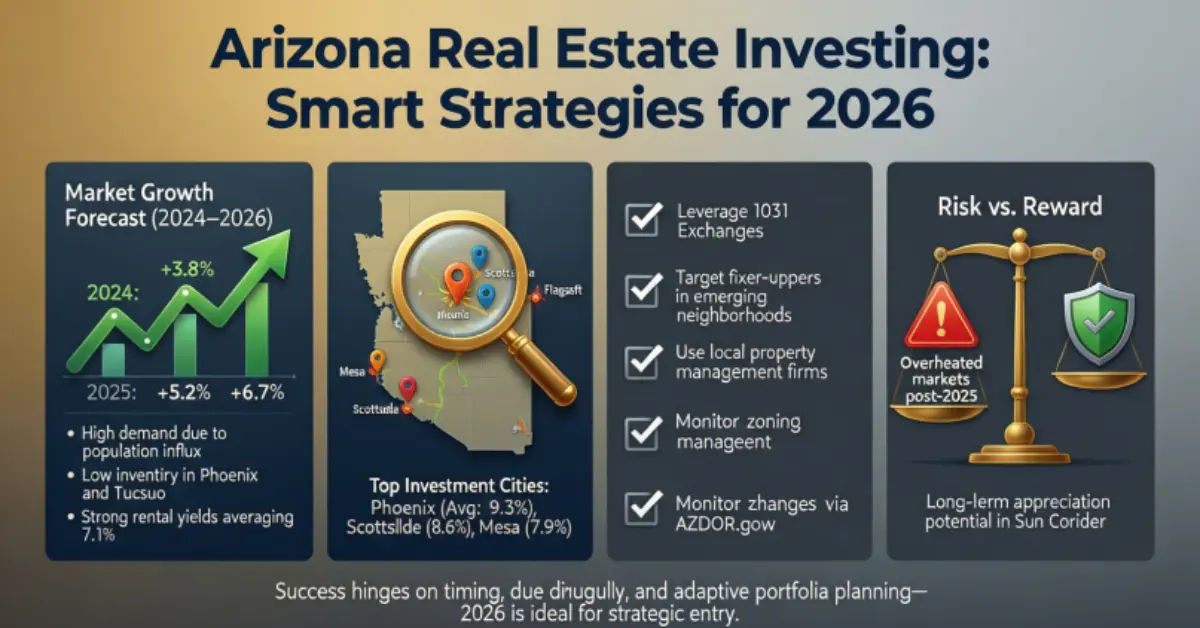
If you’ve ever thought about diving into real estate, Arizona should be on your radar. Arizona real estate investing isn’t just about buying a property – it’s about tapping into a state that’s growing fast, full of opportunities, and surprisingly diverse in its investment options. From bustling cities like Phoenix and Scottsdale to up-and-coming suburbs, Arizona offers a mix of rental income potential, appreciation opportunities, and investor-friendly conditions.
Table of Contents
Why Arizona is a Hotspot for Property Investors
There are a few reasons why smart investors are flocking to Arizona:
- Population Boom: Arizona’s population has surged over the past few years, with people moving from more expensive states like California and New York. More residents mean more renters, more buyers, and a stronger demand for housing overall.
- Job Growth: The tech, healthcare, and finance sectors are expanding rapidly. Cities like Phoenix and Tucson are attracting professionals who need rental housing close to work.
- Affordable Entry Compared to Other States: While prices are rising, Arizona is still more affordable than markets like California, Florida, or New York. This makes it easier for first-time investors to get in without breaking the bank.
- Tax Benefits and Business-Friendly Policies: Low property taxes, no estate tax, and relatively simple regulations make it appealing for investors who want predictable costs.
Current Market Trends and Growth Factors
The Arizona housing market has seen some interesting trends recently:
- Rising Home Values: Property prices have been steadily appreciating, especially in Phoenix and Scottsdale. While it’s not a runaway boom, the growth is consistent, which is ideal for long-term investors.
- High Rental Demand: With more people moving in for jobs, education, and lifestyle, rental properties are in high demand. Single-family homes and small multifamily units are especially popular.
- Urban Expansion: Suburbs and nearby towns are becoming hot spots. Places that were once overlooked are now seeing new businesses, schools, and infrastructure, which often translates into property appreciation.
Mini Observation: Even small investments in Arizona can pay off if you research neighborhoods carefully. Sometimes the best opportunities aren’t in the flashy city center but in growing suburbs where demand is quietly climbing.
Understanding the Arizona Housing Market
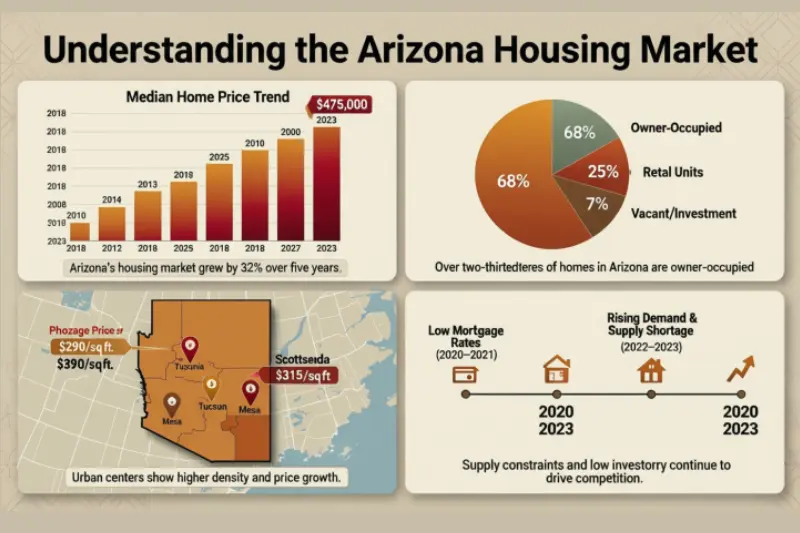
Before you dive into Arizona real estate investing, it’s crucial to understand the market dynamics at play. Arizona isn’t just a collection of desert towns – it’s a rapidly evolving housing market shaped by population growth, migration trends, and a strengthening economy. Knowing these factors can help you identify profitable opportunities and avoid costly mistakes.
Population Growth and Migration Trends
Arizona has been one of the fastest-growing states in the U.S. over the last decade. People are moving here for several reasons:
- More Affordable Housing: Compared to states like California or New York, Arizona offers relatively lower home prices, making it an attractive choice for families and retirees alike.
- Lifestyle Appeal: Warm weather, outdoor recreation, and a relaxed lifestyle attract both young professionals and retirees.
- Domestic Migration: A significant portion of new residents are relocating from other states, bringing in higher incomes and new rental demand.
Example: Cities like Phoenix and Tucson are seeing neighborhoods expand rapidly. A single-family home bought in a growing suburb five years ago could now command double the rent or resale value.
This population influx isn’t just about numbers – it’s about demand for housing. More residents mean more rentals, more home sales, and a larger pool of potential buyers for investors to target.
May be you like it:
How Long Does It Take to Learn Day Trading Effectively?
Boost Your Career with an Online Accounting Diploma
Smart Strategies for Generational Wealth Management
What Is a Smart Investment – Simple Guide for Beginners
Job Market and Economic Factors Driving Real Estate Demand
Population growth is only part of the story. A strong local economy drives long-term demand for housing. Here’s what makes Arizona appealing from a job and economic perspective:
- Tech and Finance Expansion: Phoenix, Scottsdale, and Chandler have become hubs for tech startups and financial services. This growth attracts young professionals looking for rental housing close to work.
- Healthcare Boom: Hospitals, clinics, and health services are expanding across the state, especially in suburban areas, creating stable housing demand.
- Tourism and Service Industries: Cities like Scottsdale, Sedona, and Lake Havasu draw tourists year-round, creating short-term rental opportunities and supporting local economies.
- Infrastructure and Development: New roads, schools, and commercial projects are transforming suburbs into investment-worthy areas.
Mini Observation: A strong job market doesn’t just support housing demand – it also reduces vacancy risk. Properties in areas with consistent employment opportunities are less likely to sit empty.
Reflective Question: When choosing a neighborhood, are you looking at just current popularity, or are you considering long-term economic drivers like job growth and infrastructure development?
Top Cities and Neighborhoods to Invest In
When it comes to Arizona real estate investing, location is everything. Picking the right city or neighborhood can make the difference between a steady rental income and a property that struggles to attract tenants. While the state offers a lot of opportunities, a few cities consistently stand out – both for established investors and newcomers.
Phoenix: The Urban Growth Engine
Phoenix isn’t just the capital of Arizona – it’s the heartbeat of the state’s real estate market. With a booming job market, expanding suburbs, and strong population growth, Phoenix offers a mix of opportunities for rental income and long-term appreciation.
- Hot Neighborhoods: Arcadia, North Phoenix, and Gilbert are attracting families and young professionals.
- Investment Tip: Look for single-family homes and small multifamily units in suburbs with good schools and new commercial development. These areas often have steady rental demand and long-term value growth.
Mini Example: A duplex in North Phoenix bought five years ago may now yield higher rent than a similar property closer to the city center – without the premium price tag.
Scottsdale: Luxury and Stability
Scottsdale is known for its upscale properties, golf communities, and tourism. It’s not the cheapest market, but it’s stable and attractive to high-income renters and buyers.
- Opportunity: Short-term rentals or high-end condos can generate strong returns, especially near Old Town Scottsdale.
- Consideration: Property management is crucial here – tenant expectations are higher, and competition can be fierce.
Mesa: Affordable Growth
Mesa offers affordability compared to Phoenix and Scottsdale but still benefits from the metro area’s expansion. It’s ideal for investors looking for long-term appreciation without breaking the bank upfront.
- Growing Suburbs: East Mesa and Gilbert border areas are seeing new schools and shopping centers, which attract families.
- Investor Insight: Properties here often appreciate steadily while providing reliable rental income.
Tucson: University and Job-Driven Demand
Tucson is a unique market with strong rental demand from students, medical professionals, and tech employees. Its lower cost of entry makes it attractive for new investors.
- Key Areas: Downtown Tucson, Sam Hughes, and Catalina Foothills.
- Tip: Consider long-term rentals for families or professionals rather than relying heavily on student housing to reduce turnover headaches.
Up-and-Coming Areas With High Growth Potential
While the big cities are safe bets, some suburbs and smaller towns are quietly becoming investment hotspots:
- Queen Creek and Maricopa: Suburbs of Phoenix with new schools and residential projects.
- Goodyear and Surprise: Affordable homes with infrastructure growth.
- North Tucson and Oro Valley: Strong local economies and rising demand.
Reflective Question: Are you chasing a trendy neighborhood, or are you looking at long-term growth potential that may not be obvious to everyone yet?
Types of Real Estate Investments in Arizona
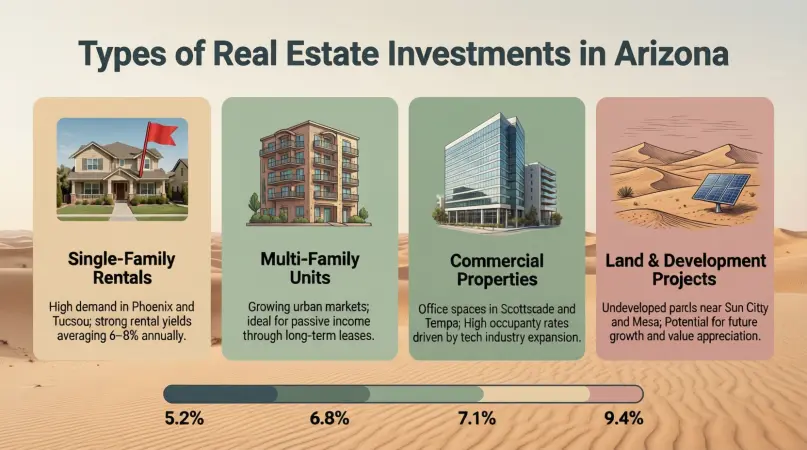
When it comes to Arizona real estate investing, not all properties are created equal. Your investment type will determine your potential returns, management effort, and risk level. Understanding the options helps you pick the right strategy for your goals – whether it’s steady rental income, quick flips, or long-term appreciation.
Single-Family Homes: Reliable and Popular
Single-family homes are the backbone of Arizona’s rental market. They’re ideal for families or professionals looking for long-term rentals.
Pros:
- Steady rental income
- Easier to finance
- High demand in growing suburbs
Cons:
- Longer vacancy periods if a tenant leaves
- Appreciation can be slower than multifamily or commercial properties
Mini Example: A three-bedroom home in Mesa can attract a family willing to stay for several years, providing predictable rental income. Compared to a trendy downtown condo, single-family homes often require less intensive management.
Multifamily Properties: Scale Your Income
Multifamily properties – duplexes, triplexes, or small apartment buildings – allow you to generate income from multiple units in one location.
Pros:
- Multiple income streams reduce risk
- Economies of scale for maintenance and management
- Can appreciate faster in high-demand areas
Cons:
- Higher upfront cost
- More tenant management
- Financing can be slightly more complex
Mini Insight: Investing in a duplex in Phoenix or Tucson lets you live in one unit and rent the other, offsetting your mortgage – a strategy many first-time investors use.
Condos: Low Maintenance, Moderate Returns
Condos can be attractive in urban areas like Scottsdale or downtown Phoenix. They usually require less maintenance since HOA fees cover common areas.
Pros:
- Lower maintenance effort
- Often located near employment centers or amenities
- Good for first-time investors
Cons:
- HOA fees reduce net cash flow
- Appreciation may be slower than single-family homes
Short-Term Vacation Rentals vs. Long-Term Rentals
Arizona’s tourist spots and city centers open opportunities for both short-term and long-term rentals.
Short-Term Rentals:
- Best in Sedona, Scottsdale, Lake Havasu City
- Can earn higher returns during peak seasons
- Requires active management and marketing
Long-Term Rentals:
- Stable income and lower turnover
- Ideal near job centers, schools, or suburbs
- Less stress with tenant management
Reflective Question: Do you prefer the excitement and higher earnings of a short-term rental, or the predictability and lower stress of long-term tenants? Your answer will shape the type of property you should pursue.
Rental Properties and Cash Flow Strategies
If your goal with Arizona real estate investing is consistent income, rental properties are the way to go. But it’s not just about buying a property and hoping for the best – understanding cash flow, ROI, and tenant strategy is what separates successful investors from those who struggle.
How to Calculate Rental Income and ROI
Before buying any property, you need to understand the numbers. Here’s a simple way to approach it:
- Gross Rental Income: Estimate how much rent you can charge per month. For example, a three-bedroom home in Gilbert might rent for $2,200/month.
- Expenses: Include mortgage, property taxes, insurance, HOA fees, maintenance, and property management costs. Let’s say your total monthly expenses are $1,500.
- Net Cash Flow: Subtract expenses from rental income. $2,200 – $1,500 = $700/month in positive cash flow.
- ROI (Return on Investment): Calculate ROI by dividing your annual cash flow by your total investment. If your down payment and closing costs were $50,000, your ROI = ($700 × 12) ÷ $50,000 = 16.8%.
Mini Insight: Positive cash flow is great, but also consider long-term appreciation. Arizona properties often increase in value steadily, meaning your ROI grows over time.
Targeting Long-Term Renters for Steady Income
Long-term tenants – families, professionals, or retirees – often provide the most stable income. Why?
- Less turnover = fewer vacancies
- Lower maintenance from careful tenants
- Predictable rent for 12+ months
Practical Tip: Focus on properties near good schools, hospitals, or employment hubs. These areas attract tenants who plan to stay, reducing the hassle of constantly finding new renters.
Mini Example: A single-family home in a Phoenix suburb with nearby schools and parks is more likely to attract a family willing to sign a 12-month lease than a property in a trendy but transient downtown neighborhood.
Reflective Question: Would you rather deal with the ups and downs of short-term renters, or build a steady, long-term cash flow that compounds over years? Choosing your tenant type is as strategic as picking the property itself.
Fix-and-Flip and Appreciation Opportunities
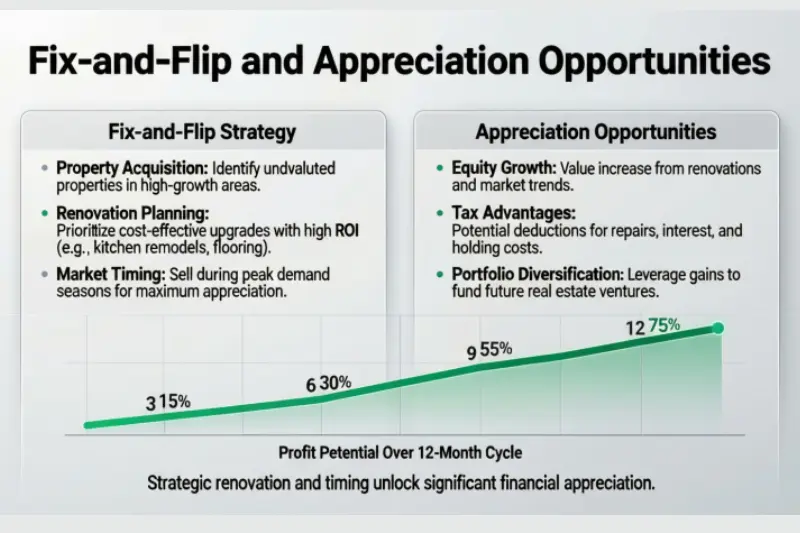
While rental properties provide steady income, Arizona real estate investing can also be highly profitable for those interested in fix-and-flip strategies or long-term appreciation. Buying undervalued properties, improving them, and either renting or reselling can generate significant returns – but it requires research, planning, and a keen eye for opportunity.
Identifying Undervalued Properties
The key to a successful fix-and-flip or appreciation-focused investment is spotting properties that are priced below market value but have potential to increase in worth. Look for:
- Neighborhoods on the Rise: Areas near new schools, shopping centers, or commercial developments often experience price growth over time.
- Aging Homes Needing TLC: Older properties with cosmetic or minor structural issues can often be purchased below market price.
- Motivated Sellers: Sometimes homeowners need to sell quickly due to relocation, financial reasons, or inherited property – these opportunities can allow you to negotiate a better price.
- Mini Example: A 1980s-era home in a growing Phoenix suburb may look outdated, but a fresh coat of paint, new flooring, and updated kitchen appliances can increase its market value substantially.
Reflective Question: Are you willing to invest time and effort into renovations, or do you prefer properties that are ready to rent immediately? Your answer will guide the type of fix-and-flip opportunities to pursue.
Planning for Renovations and Resale
Once you’ve found a promising property, having a clear renovation plan is crucial:
- Focus on High-Impact Improvements: Kitchens, bathrooms, and curb appeal typically offer the best return on investment.
- Budget Wisely: Always add a 10–15% buffer for unexpected costs. Arizona’s desert climate, for example, may require roof or irrigation system upgrades that aren’t obvious at first glance.
- Resale Strategy: Know your target buyer. Are you flipping for a family, young professionals, or retirees? Your renovation style should match their expectations.
Mini Insight: A well-planned renovation in Scottsdale or Mesa could increase a home’s value by 20–30% within months, while also attracting tenants or buyers faster.
Reflective Question: Are you buying a property for quick resale, or are you planning to hold it for long-term appreciation? Arizona’s market allows for both, but your approach will influence your strategy and financing.
May be you like it:
Free Trading Webinar: Learn Smart Market Strategies
Certificate in Business Management Online: Your Career Boost
Smart Generational Wealth Planning for Lasting Legacy
Top Personal Investment Company Tips for Smart Investors
Financing Your Investment
One of the most critical aspects of Arizona real estate investing is understanding how to finance your property. The right financing strategy can maximize your returns, reduce stress, and help you scale your portfolio faster.
Mortgage Options, Interest Rates, and Down Payment Strategies
There are several ways to finance a property in Arizona:
- Conventional Mortgages: Standard loans with competitive interest rates. Great for investors with good credit and a solid down payment.
- FHA or VA Loans: If you qualify, these options require lower down payments and can help first-time investors get started.
- Cash Purchases: Using cash eliminates interest payments and speeds up closings, but it ties up capital that could be used for multiple properties.
- Private or Hard Money Loans: Short-term, higher-interest loans that are useful for fix-and-flip projects.
Tip: Even small differences in interest rates can impact your ROI. For example, a 0.5% lower interest rate on a $300,000 property could save thousands annually – money you can reinvest in another property.
Down Payment Strategies:
- A 20% down payment is common to avoid private mortgage insurance (PMI).
- Some investors start smaller if using FHA loans or combine funds from multiple sources.
Risk Assessment and Cash Flow Planning
Before signing on the dotted line, take a realistic look at your financials:
- Cash Flow Projections: Calculate expected rent, minus mortgage, taxes, insurance, HOA, maintenance, and property management. Ensure you’ll have a positive monthly cash flow.
- Emergency Fund: Always plan for unexpected repairs, vacancies, or market shifts. A few months of expenses saved can prevent stress during tough periods.
- Stress-Test Scenarios: What happens if interest rates rise or rents drop 10%? Knowing your worst-case scenario helps avoid financial strain.
Mini Example: Let’s say you buy a $250,000 home in Mesa with a $50,000 down payment. Your mortgage and expenses total $1,500/month, and you expect $2,000/month in rent. You have $500/month cash flow – but if interest rates rise by 1% or the property is vacant for a month, that cushion shrinks. Planning ahead avoids surprises.
Reflective Question: Have you considered not just your expected returns, but how much risk you’re willing to tolerate? Arizona’s market can be forgiving, but smart financing is what separates successful investors from those who overextend.
Avoiding Common Pitfalls
Even experienced investors can stumble if they overlook the basics. When it comes to Arizona real estate investing, avoiding common mistakes can save you money, stress, and time. Knowing what to watch out for is just as important as knowing where to invest.
Overpaying for Hype Neighborhoods
It’s easy to get caught up in “trendy” neighborhoods or areas everyone is talking about. While hot spots like downtown Phoenix or Old Town Scottsdale are appealing, overpaying can hurt your returns.
- Look Beyond the Buzz: Check rental yields, vacancy rates, and neighborhood growth trends. Just because an area is popular doesn’t mean it’s profitable for investors.
- Consider Emerging Areas: Some suburbs or up-and-coming neighborhoods may have slightly lower prices but strong long-term potential.
- Mini Example: A flashy condo in downtown Phoenix might be priced $50,000 higher than a nearby suburban townhouse that provides higher rental income and lower management headaches.
Tenant Issues and Maintenance Costs
Managing tenants can be rewarding but comes with challenges. Problems like late payments, property damage, or frequent turnover can reduce your cash flow quickly.
- Tenant Screening is Key: Always check credit, employment history, and references. Reliable tenants save money and stress.
- Budget for Maintenance: Arizona’s dry climate can be tough on roofs, landscaping, and irrigation systems. Unexpected repairs are part of the game – plan for them.
- Mini Insight: Even small issues, like a broken AC unit during the scorching summer, can lead to unhappy tenants and costly repairs. Having a maintenance fund is essential.
Market Missteps
Real estate isn’t risk-free. Some investors make mistakes by ignoring local market trends, property taxes, or regulatory changes.
- Do Your Research: Stay updated on local zoning, development projects, and housing market trends.
- Think Long-Term: Don’t chase short-term gains at the expense of sustainable income. Arizona’s market favors patient investors who plan carefully.
Reflective Question: Are you choosing properties based on solid research, or are you letting hype and emotions drive your decisions? One wrong purchase can cost years of potential returns.
Building a Local Support Team
One of the smartest strategies in Arizona real estate investing is surrounding yourself with the right people. Even experienced investors can struggle without local guidance. A reliable support team helps you make better decisions, manage properties efficiently, and avoid costly mistakes.
Real Estate Agents, Property Managers, and Contractors
Your investment journey becomes much smoother when you have trusted professionals on your side:
- Real Estate Agents: A knowledgeable local agent can identify hidden gems, negotiate better deals, and help you understand neighborhood trends. They often have insight you won’t find online.
- Property Managers: If you’re not living near your rental property, a good property manager handles tenant screening, rent collection, maintenance, and emergency issues. They save you time and stress.
- Contractors: Reliable contractors are essential for renovations, repairs, and maintenance. Building a relationship with trustworthy professionals ensures projects stay on schedule and within budget.
Mini Example: Imagine finding a fixer-upper in a growing Tucson suburb. A local contractor can advise which renovations will add the most value, while a property manager can start lining up tenants even before you close. Your agent makes sure the price is fair – teamwork multiplies your success.
Importance of Local Expertise and Networking
Arizona’s real estate market varies city by city, and even neighborhood by neighborhood. Local experts know:
- Which areas are appreciating fastest
- Upcoming developments that may impact property values
- Rent trends and tenant preferences
Networking with other investors can also uncover off-market deals, partnerships, or advice you won’t find in articles or online listings.
Reflective Question: Are you willing to go it alone, or will you leverage local expertise to maximize your Arizona real estate investing potential? Even small connections can save thousands of dollars and avoid headaches.
Long-Term Strategies for Success
Investing in Arizona real estate isn’t just about the immediate buy or rental income – it’s about building a strategy that pays off over years, sometimes decades. The investors who succeed focus on long-term planning, staying informed, and adapting to market changes.
Planning for 5–10 Year Appreciation
Arizona’s real estate market favors patience. While rental income provides steady cash flow, property values typically grow over time. Planning with a 5–10 year horizon allows you to maximize appreciation without making rushed decisions.
- Focus on Growth Areas: Suburbs with new schools, infrastructure projects, or commercial development often see steady appreciation.
- Balance Cash Flow and Potential Growth: Even if a property offers slightly lower rent, it may appreciate faster in a growing neighborhood.
- Hold, Don’t Flip (Always): Some investors make the mistake of chasing short-term gains. Arizona’s market rewards those who hold strong properties in strategic areas.
Mini Example: A family home purchased in Queen Creek or Goodyear five years ago might have doubled in value today – not because of hype, but because the area steadily developed and attracted new residents.
Staying Updated on Market Trends and Regulations
The market isn’t static. Arizona cities update zoning laws, property tax rates, and housing regulations regularly. Staying informed keeps you ahead:
- Follow Local News and Market Reports: Phoenix, Tucson, and Scottsdale real estate blogs or city planning updates provide insight into upcoming changes.
- Network with Other Investors: Local investment groups or meetups can give firsthand knowledge about neighborhood shifts, rental demand, or upcoming development projects.
- Regularly Reassess Your Portfolio: Evaluate which properties are underperforming, which neighborhoods are growing, and when it makes sense to buy, hold, or sell.
Reflective Question: Are you simply buying properties, or are you building a long-term plan to grow your wealth with Arizona real estate? Staying proactive ensures your investments keep performing over the years.
FAQ
Is Arizona a good state for real estate investing?
Yes! With growing cities, a strong job market, and rising demand for housing, Arizona offers opportunities for both rental income and property appreciation.
Which cities in Arizona are best for investment?
Phoenix, Scottsdale, Mesa, and Tucson are top choices, with fast-growing suburbs like Queen Creek, Goodyear, and Maricopa offering hidden potential.
Should I invest in short-term rentals or long-term rentals?
It depends on your goals. Short-term rentals can earn more in tourist areas, but long-term rentals provide stable, predictable income and lower management stress.
How can I identify undervalued properties?
Look for homes in emerging neighborhoods, properties that need cosmetic upgrades, or motivated sellers. Research local growth trends to ensure appreciation potential.
Do I need a team to invest in Arizona real estate?
While not mandatory, a local team of agents, property managers, and contractors makes investing easier, reduces risk, and helps you make smarter decisions.
Conclusion
Arizona real estate investing is more than just buying property – it’s about making informed decisions, planning for the long term, and leveraging opportunities in a growing market. Whether you’re pursuing steady rental income, flipping undervalued homes, or holding for appreciation, the key is research, patience, and strategy.
By focusing on high-growth cities, understanding market trends, calculating cash flow, and building a reliable local team, you set yourself up for success. Keep an eye on emerging neighborhoods, plan for renovations wisely, and always consider the long-term potential of your investments.
Reflective Thought: Are you ready to turn Arizona’s booming housing market into a source of steady income and long-term wealth? With the right approach, your investment journey in Arizona can be both profitable and rewarding.
May be you like it:
Stock Market for Beginners PDF – Your Simple Starter Guide
Top MBA Certificate Programs Online for Career Growth
