


Introduction to Wealth Succession Planning
When most people hear the term wealth succession planning, their minds immediately jump to wills or passing down money to heirs. But it’s much more than that. At its core, wealth succession planning is about strategically preparing your assets, values, and legacy to flow smoothly to the people and causes you care about, while minimizing conflict, taxes, and unexpected complications.
Why does it matter beyond just drafting a will? Because a will alone doesn’t always protect your family, your business, or the relationships you’ve built over a lifetime. Without a thoughtful plan, heirs may face disputes, tax surprises, or delays that erode the very legacy you worked so hard to create.
Think of it like this: you wouldn’t build a house without a blueprint. Likewise, wealth succession planning acts as a roadmap for your financial future, ensuring that every brick of your legacy lands exactly where you want it. And here’s the kicker-most people only start thinking about this when it’s too late, leaving families scrambling and businesses at risk.
Table of Contents
The Risks of Not Planning Your Wealth

Skipping wealth succession planning might feel like “out of sight, out of mind,” but the consequences can be surprisingly messy. Without a clear plan, even modest estates can spiral into conflict, confusion, or financial loss.
Family disputes are one of the most common pitfalls. You might think your heirs know your wishes, but assumptions rarely align with reality. Siblings may disagree over asset distribution, or extended family members might contest a will. These arguments aren’t just emotional-they can drag on for months or even years, depleting both wealth and family harmony.
Then there are tax consequences. Estate and inheritance taxes can take a significant chunk of your assets if not carefully planned for. Imagine leaving behind a business or property only to see a large portion swallowed up by taxes-resources that could have supported your loved ones instead vanish. Strategic planning can reduce this burden, but without it, even the best-laid intentions may fall short.
Finally, consider business or asset mismanagement. If you own a business, art collection, or investment portfolio, a lack of structured succession planning can leave your successors clueless about managing it. Valuable assets might be sold off hastily, or businesses could falter without leadership continuity. Your legacy-built over decades-can unravel quickly if there isn’t a roadmap in place.
May be you like it:
Top 10 Best Trading YouTube Channels to Follow in 2025
Funding an LLC: Easy Ways to Get Startup Money
Family Wealth Strategy – Build and Protect Your Legacy
Invest Wisely: Smart Tips for Growing Your Money
Wills vs. Trusts: What You Need to Know
When it comes to wealth succession planning, one of the first decisions many people face is whether to rely on a will, a trust, or both. While both tools aim to protect your assets and pass them to your heirs, they serve different purposes-and understanding the difference can save your family time, money, and headaches.
A will is the most familiar tool. It’s a legal document that specifies how you want your assets distributed after your death. Wills are straightforward and relatively easy to create, making them a natural starting point. However, a will usually must go through probate-a court-supervised process that can take months and expose your estate to public scrutiny.
A trust, on the other hand, offers more flexibility and control. With a trust, you can dictate not only who receives your assets, but also when and how they receive them. For example, you might set up a trust that releases funds to your children gradually as they reach certain milestones, protecting them from financial mismanagement. Trusts also often avoid probate, which can save time and maintain privacy.
Here’s a real-world scenario: John, a business owner, created a will but didn’t establish a trust. When he passed, his family faced lengthy probate proceedings, and his children had to wait months before accessing key assets. Contrast this with Lisa, who set up a trust for her business and investments. Her heirs received their inheritance efficiently, and the business continued operating smoothly without interruption.
Both wills and trusts are important tools in wealth succession planning, and often the best approach is to use them together. A will can handle simpler bequests, while trusts can manage more complex assets, ensuring your legacy is fully protected.
Tax Planning Strategies
Taxes can quietly erode a legacy if they’re not carefully managed. That’s why wealth succession planning always includes smart tax strategies to protect your hard-earned assets.
Estate and gift taxes are often the first hurdle. Without proper planning, your heirs could face hefty bills that eat into their inheritance. For instance, if you pass down property or large investments without structuring it strategically, the government could claim a significant portion before anyone sees a penny. The right plan can minimize these taxes, leaving more for the people and causes you care about.
Charitable contributions are another powerful tool. Beyond supporting causes close to your heart, charitable giving can reduce taxable income and estate taxes. Many families use donor-advised funds or charitable trusts to balance generosity with tax efficiency-helping your wealth do more than just pass on to heirs.
Proper planning also involves timing and structuring gifts thoughtfully. You might give certain assets during your lifetime, use tax-exempt allowances, or leverage trusts to shield assets. Even small adjustments can prevent large losses and make the succession process smoother.
Business Succession Planning
If you own a business, your legacy isn’t just financial-it’s also the company you’ve built, the employees you’ve nurtured, and the impact you’ve made in your industry. That’s why wealth succession planning must include a clear business succession strategy. Without it, even successful businesses can falter when leadership changes unexpectedly.
Preparing successors is the first step. You need to identify who will take the reins-whether it’s a family member, a trusted employee, or an outside buyer-and then give them the training and guidance to succeed. This isn’t just about skills; it’s about understanding your vision, values, and how decisions are made in your company.
Transition strategies come next. This might include gradually transferring ownership, creating shareholder agreements, or setting up management structures that ensure smooth decision-making. Think of it as handing over a baton in a relay race: timing and preparation are everything.
Finally, maintaining business continuity is critical. Even with a solid successor, sudden gaps in leadership can disrupt operations, revenue, and employee morale. Proper planning ensures that your company continues to thrive, protects jobs, and preserves its reputation-so your legacy isn’t just in assets, but in the business itself.
Here’s a real-world example: Mark, a small manufacturing owner, didn’t plan for succession. When he retired suddenly, the business struggled because no one was ready to lead. Contrast that with Elena, who implemented a step-by-step succession plan, mentoring her chosen successor over five years. Her business not only survived but expanded, keeping employees secure and clients happy.
Bottom line: Business succession planning isn’t optional if your goal is to protect your wealth and your legacy-it’s essential.
Insurance and Financial Safeguards

When most people think about wealth succession planning, insurance doesn’t always come to mind-but it’s one of the most practical tools to protect your legacy. Proper insurance and financial safeguards ensure your heirs can access funds when they need them most, without disrupting your estate or long-term plans.
Life insurance as a liquidity tool is a classic example. Even if your estate includes real estate, investments, or a business, your heirs might need cash quickly to cover taxes or immediate expenses. A well-structured life insurance policy provides that liquidity, so assets don’t have to be sold hastily, and your family can maintain financial stability during a stressful time.
Insurance also protects heirs from unexpected costs. Medical bills, debt obligations, or sudden emergencies can quickly erode the inheritance you intended to leave. By anticipating these risks, you create a financial safety net that shields your loved ones and preserves your hard-earned wealth.
Finally, insurance complements your estate plan by filling gaps that other tools-like trusts or wills-might leave open. For example, if a trust distributes assets gradually, life insurance can provide immediate funds to cover living expenses, ensuring the transition is smooth and stress-free.
Consider this: even a carefully planned estate can falter if your heirs don’t have access to cash when they need it. Insurance turns uncertainty into stability, giving your legacy the best chance to survive and flourish.
May be you like it:
Top Finance Webinars to Boost Your Money Skills
My Funding Choice: Find the Best Way to Finance Your Goals
Wealth and Success – Habits That Transform Your Future
Invest Criteria: How to Choose Smart Investments
Family Communication & Emotional Considerations
One of the most overlooked aspects of wealth succession planning isn’t legal or financial-it’s emotional. How you communicate your plans with your family can make the difference between a smooth transition and long-lasting conflict.
Discussing plans with heirs may feel uncomfortable, but it’s crucial. Sitting down with your children, spouse, or other beneficiaries helps set expectations, answer questions, and give them a clear sense of your intentions. It’s not about micromanaging their lives-it’s about making sure everyone knows your wishes and understands the reasoning behind them.
Avoiding surprises and conflicts is another key reason to communicate openly. Sudden revelations about inheritances, business leadership, or asset distribution often lead to misunderstandings, resentment, or even legal battles. By talking things through early, you reduce tension and create an environment of trust.
Finally, it’s important to align family values with wealth goals. Your wealth isn’t just money-it represents your values, principles, and the legacy you hope to leave. Maybe you want to encourage philanthropy, support education, or ensure that the family business continues responsibly. Sharing these values ensures your legacy is not only preserved financially but also culturally and emotionally.
Steps to Start Your Wealth Succession Plan
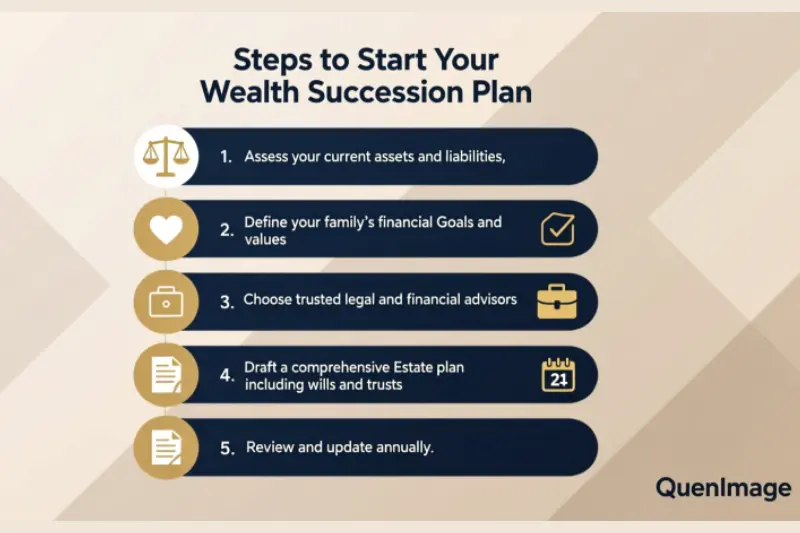
Starting your wealth succession planning journey can feel overwhelming, but breaking it down into clear, practical steps makes it manageable-and even empowering. The goal is simple: take control of your legacy so it reaches the people and causes you care about.
- Inventorying Assets
The first step is to take a thorough look at everything you own. This isn’t just about bank accounts and property-it includes investments, retirement funds, businesses, collectibles, and even digital assets. Think of it like creating a map of your financial world. Knowing exactly what you have is the foundation for any effective plan. - Engaging Professional Advisors
No one has to go it alone. Estate lawyers, financial planners, tax experts, and trust advisors bring specialized knowledge that ensures your plan is legally sound, tax-efficient, and tailored to your goals. Their guidance turns complex processes into manageable steps, helping you avoid costly mistakes or oversights. - Setting Goals and Priorities
Once you know what you have and who can help, it’s time to define your objectives. Ask yourself: Who should benefit most? Are there charitable causes you want to support? How should your business transition? Setting clear priorities gives your plan direction, ensures alignment with family values, and makes future decisions easier.
A quick reflection: even starting small-writing down your assets, or having an initial conversation with an advisor-puts you ahead of most people who postpone planning until it’s too late. Action, even incremental, is better than leaving your legacy to chance.
Common Mistakes to Avoid
Even when people understand the importance of wealth succession planning, certain missteps can undo all their careful work. Avoiding these common mistakes can save your heirs stress, money, and frustration.
- Delaying Planning
Many people think it’s “too early” to plan their estate or succession. The truth is, the earlier you start, the more control you have. Life is unpredictable, and waiting until later can leave your family unprepared for sudden events. Even small steps now-like listing assets or discussing intentions-can make a huge difference down the road. - Relying Solely on Wills
A will is important, but it’s not enough on its own. Without trusts, insurance, or other strategies, assets may be exposed to probate delays, taxes, or disputes. Combining tools creates a more robust plan and ensures that your legacy flows smoothly according to your intentions. - Ignoring Updates After Major Life Events
People often create a plan once and then forget about it. But life changes-marriage, divorce, births, deaths, business growth-can all impact your wealth and beneficiaries. Ignoring updates can lead to unintended consequences, like leaving assets to the wrong people or exposing your estate to unnecessary taxes.
Here’s a relatable scenario: Emily set up a will early in her career but didn’t update it after having children. Years later, her estate plan didn’t reflect her new family priorities, causing confusion and delays for her heirs. Regularly revisiting your plan prevents this kind of misalignment.
Maintaining and Updating Your Plan
Creating a wealth succession plan is just the beginning. To truly protect your legacy, it’s essential to maintain and update your plan regularly. Think of it as tending a garden: without care and adjustments, even the best-laid plans can wither over time.
Regular review cycles are key. Set a schedule-annually or every few years-to revisit your plan. Check whether your assets, beneficiaries, or goals have changed, and make adjustments accordingly. This proactive approach ensures your plan remains relevant and effective.
Adapting to changes in law, family, and assets is equally important. Tax laws, estate regulations, and business rules can shift unexpectedly. Life events like marriage, divorce, births, or deaths also impact your plan. By staying attentive, you prevent your legacy from being disrupted by unforeseen circumstances.
Finally, maintaining your plan ensures that your legacy stays intact over time. It’s not just about passing on wealth-it’s about preserving your values, protecting your family, and ensuring your intentions are honored long after you’re gone. Even small tweaks now can make a world of difference in how your legacy is experienced by future generations.
FAQs: Wealth Succession Planning
What is wealth succession planning?
It’s the process of organizing your assets, values, and legacy to ensure they are passed on smoothly to your heirs, business successors, or chosen causes. It goes beyond just creating a will.
Do I need both a will and a trust?
Often, yes. A will handles basic bequests, while a trust offers more control over when and how assets are distributed and can help avoid probate. Using both can strengthen your plan.
When should I start planning?
The earlier, the better. Even starting small-like listing assets or having an initial conversation with heirs-can prevent future conflicts and ensure your legacy is protected.
How can I reduce taxes on my estate?
Tax-efficient strategies include charitable contributions, lifetime gifts, and structuring trusts properly. Consulting a tax or estate advisor helps maximize your wealth for heirs.
How often should I update my plan?
Plans should be reviewed regularly, especially after major life events like marriage, divorce, births, deaths, or business changes, and whenever laws affecting estates or taxes are updated.
Conclusion
Wealth succession planning isn’t just about money-it’s about the people, values, and achievements you care most about. From protecting family harmony to minimizing taxes, ensuring business continuity, and leaving a meaningful legacy, a well-thought-out plan gives you control and peace of mind.
The key takeaway? Start early, communicate openly, and review your plan regularly. Even small, intentional steps today can prevent stress, confusion, and conflict tomorrow. By taking action now, you ensure that your wealth doesn’t just survive-it continues to support your loved ones, reflect your values, and honor the life you’ve built.
May be you like it:
Best Day Trading Setup – Simple Strategies That Work
Business Finance Definition Made Easy for Understanding Info
