

Introduction:
Have you ever wondered how companies keep their finances in check while ensuring day-to-day operations run smoothly? That’s exactly where a Finance and Operations Analyst steps in. They’re the unsung heroes who bridge the gap between numbers and action, turning raw data into insights that guide strategic decisions.
In many organizations, finance teams focus on budgets, forecasts, and profitability, while operations teams handle logistics, supply chains, and process efficiency. Without someone connecting these two worlds, decisions can easily be misinformed or misaligned. A Finance and Operations Analyst ensures that financial data translates into actionable operational strategies, helping the business save money, optimize processes, and achieve its goals.
Think of it like this: if the company were a car, finance would be the dashboard showing your speed and fuel levels, operations would be the engine making the car move, and the Finance and Operations Analyst is the skilled driver who ensures both work in harmony.
Table of Contents
Understanding the Role of a Finance and Operations Analyst
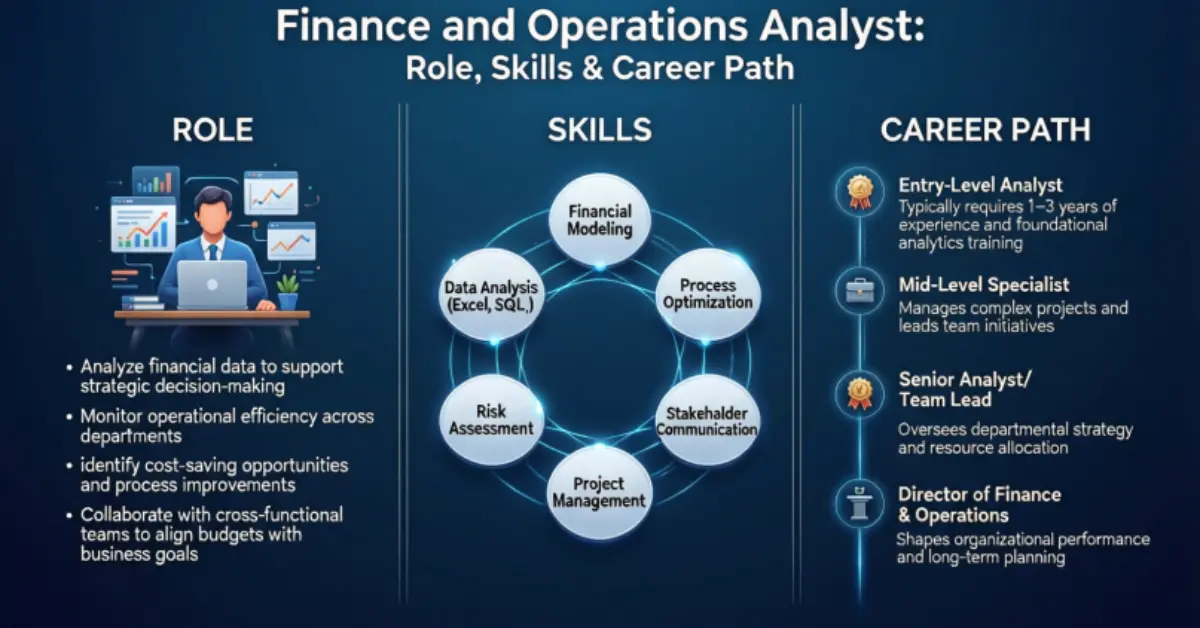
So, what does a Finance and Operations Analyst actually do day-to-day? At its core, this role is all about connecting the dots between financial data and operational activities, making sure that every business decision is both financially sound and operationally feasible.
Imagine a company planning to launch a new product. The operations team might focus on production timelines, staffing, and supply chain logistics. Meanwhile, the finance team is concerned with costs, budgets, and potential revenue. The Finance and Operations Analyst steps in to merge these perspectives, providing insights that guide both teams toward decisions that maximize efficiency and profitability. Without this role, organizations risk misaligned strategies or wasted resources.
Some of the key responsibilities include:
- Financial Analysis: Evaluating budgets, costs, and revenue streams to identify trends or risks.
- Operational Insights: Reviewing workflows, processes, and KPIs to spot inefficiencies.
- Strategic Recommendations: Translating complex data into actionable suggestions that help leaders make informed choices.
- Cross-Department Collaboration: Acting as the bridge between finance, operations, and management to align priorities.
Think of a Finance and Operations Analyst as the translator between two worlds. They speak the language of numbers but also understand the practical realities of day-to-day operations. This dual perspective is what makes the role so valuable – it’s not just about crunching numbers; it’s about making sure those numbers drive smarter, faster, and more effective business decisions.
Day-to-Day Responsibilities of a Finance and Operations Analyst

If you’re curious about what a Finance and Operations Analyst actually does every day, the answer is: quite a lot – and it’s never purely routine. This role blends number-crunching with problem-solving, collaboration, and strategic thinking.
Here’s a closer look at the key responsibilities:
Financial Reporting and Analysis
Analysts spend a significant part of their day reviewing financial statements, tracking budgets, and identifying trends. For example, they might notice that a department consistently overspends on a particular resource and recommend adjustments before it becomes a bigger issue.
Monitoring Operational Metrics
Beyond finances, analysts track operational KPIs such as production efficiency, inventory turnover, or service delivery timelines. Let’s say a warehouse is frequently delayed in shipping orders. An analyst examines the data, identifies bottlenecks, and suggests process improvements to save both time and money.
Forecasting and Budgeting
Forecasting is more than guessing next quarter’s numbers. Analysts use historical data, market trends, and operational insights to predict costs and revenue. This ensures the company can plan resources effectively without overextending budgets.
Cross-Functional Collaboration
A big part of the role involves working closely with other teams. For instance, the analyst might meet with operations managers to discuss production issues while simultaneously briefing finance leaders on potential budget impacts. They translate complex numbers into clear, actionable advice for everyone involved.
Identifying Opportunities for Improvement
Every day, analysts look for ways to optimize processes and cut unnecessary costs. Even small adjustments, like changing suppliers or automating certain reports, can lead to significant savings and efficiency gains over time.
Here’s a real-world example: In one mid-sized retail company, the Finance and Operations Analyst noticed that shipping delays were increasing customer complaints. By analyzing operational data and collaborating with finance, they proposed a revised logistics schedule that cut delivery time by 15% – a change that improved customer satisfaction and reduced extra shipping costs.
May be you like it:
How Long Does It Take to Learn Day Trading Effectively?
Boost Your Career with an Online Accounting Diploma
Smart Strategies for Generational Wealth Management
What Is a Smart Investment – Simple Guide for Beginners
Essential Skills Required for a Finance and Operations Analyst
Being a Finance and Operations Analyst isn’t just about loving spreadsheets or dashboards – it’s a role that demands a balanced mix of technical know-how, operational understanding, and strong interpersonal skills. Let’s break down the skills that make an analyst truly effective.
Financial Skills
First and foremost, analysts need a solid foundation in finance. This includes:
- Financial Analysis & Reporting: Understanding balance sheets, income statements, and cash flow reports.
- Budgeting & Forecasting: Predicting expenses and revenues to guide strategic decisions.
- Cost-Benefit Evaluation: Determining whether a project or process is worth the investment.
Practical insight: You might notice a recurring expense that seems minor at first. A skilled analyst calculates its cumulative effect and recommends a smarter allocation – something many leaders overlook.
Operational & Analytical Skills
Operations are just as crucial. Analysts must:
- Monitor Key Performance Indicators (KPIs): From production efficiency to delivery timelines, understanding what the numbers actually mean is key.
- Process Improvement: Spot inefficiencies in workflows and propose actionable changes.
- Data Analysis Tools: Proficiency in Excel, ERP systems like SAP or Oracle, and visualization tools like Tableau or Power BI.
Mini example: An analyst reviewing supply chain data might notice that certain shipments always arrive late. By digging into operational patterns, they can suggest an adjustment that saves time and reduces costs.
Soft Skills
Technical skills get your foot in the door, but soft skills keep you at the table. Important ones include:
- Communication: Explaining complex financial or operational data in simple terms for managers or team members.
- Problem-Solving: Offering actionable solutions rather than just reporting issues.
- Collaboration: Coordinating between finance, operations, and other departments to ensure decisions are aligned.
Real-world insight: Often, analysts act as “translators” between departments. For example, a finance team may insist on cutting costs, while operations needs resources to meet demand. An analyst mediates by showing data-backed options that satisfy both sides.
In short, a Finance and Operations Analyst thrives at the intersection of numbers, processes, and people. Mastering both technical and soft skills is what separates a good analyst from a truly indispensable one.
Technical Tools and Software Knowledge for a Finance and Operations Analyst
In today’s business world, a Finance and Operations Analyst isn’t just crunching numbers on paper – technology is at the heart of the role. Knowing the right tools can turn raw data into actionable insights, streamline processes, and make your work far more impactful.
ERP Systems (Enterprise Resource Planning)
ERP systems like SAP, Oracle, or NetSuite are the backbone of many organizations. They store financial records, track inventory, manage supply chains, and integrate operations across departments.
- Why it matters: An analyst who understands ERP systems can quickly extract accurate reports and spot trends that might otherwise go unnoticed.
- Practical example: Instead of manually checking stock levels across multiple warehouses, an ERP-savvy analyst can run a real-time report to identify bottlenecks or forecast shortages.
Excel and Spreadsheet Mastery
Yes, spreadsheets are still king. Advanced Excel skills – pivot tables, VLOOKUP, macros, and financial modeling – are indispensable.
- Why it matters: Excel allows analysts to manipulate data, create forecasts, and test scenarios quickly.
- Mini insight: Many analysts find that even small Excel shortcuts save hours every week, leaving more time for analysis instead of data wrangling.
Data Visualization Tools
Data isn’t helpful if no one understands it. Tools like Tableau, Power BI, or Google Data Studio let analysts turn complex data into charts, dashboards, and visual stories.
- Why it matters: Leaders can grasp insights at a glance, making faster, better-informed decisions.
- Real-world example: A dashboard showing sales trends by region can help executives reallocate resources to top-performing areas – all without flipping through hundreds of spreadsheets.
How Tech Skills Enhance Effectiveness
Technology isn’t just a convenience; it’s what separates good analysts from great ones. With the right tools, a Finance and Operations Analyst can:
- Automate repetitive reporting tasks
- Identify inefficiencies in operations before they become costly
- Present insights in ways that are actionable, not just informative
Here’s a practical takeaway: mastering these tools doesn’t just make your work easier – it increases your credibility with leadership. When your insights are backed by accurate, real-time data and presented clearly, decision-makers are more likely to trust and act on them.
Educational Requirements for a Finance and Operations Analyst

Becoming a Finance and Operations Analyst requires more than curiosity about numbers and processes – a solid educational foundation helps you hit the ground running. While real-world experience matters a lot, certain degrees and certifications give you a competitive edge.
Relevant Degrees
Most analysts start with a bachelor’s degree in one of the following areas:
- Finance or Accounting: Builds a strong understanding of financial statements, budgeting, and forecasting.
- Economics: Offers analytical skills and a macro view of how markets and businesses operate.
- Business Administration or Management: Prepares you to understand operations, strategy, and cross-department collaboration.
- Engineering or Statistics (optional): For those who enjoy data analysis and quantitative problem-solving.
Practical insight: Many successful analysts didn’t stop at their bachelor’s – they pursued further learning while working, which made them stand out during promotions or competitive hiring processes.
Certifications That Boost Credibility
Certifications signal expertise and commitment to the role. Some widely recognized ones include:
- CPA (Certified Public Accountant): Shows mastery of accounting and financial principles.
- CFA (Chartered Financial Analyst): Demonstrates advanced financial analysis and investment knowledge.
- PMP (Project Management Professional): Useful for operations-heavy roles that require managing projects and workflows.
Mini example: An analyst with a CFA might be better equipped to assess investment decisions or cost-saving strategies, while a PMP certification can help streamline operational projects efficiently.
Recommended Learning Paths for Beginners
If you’re just starting out, here’s a roadmap:
- Earn a relevant bachelor’s degree (Finance, Accounting, Business, or Economics).
- Get hands-on experience through internships or entry-level roles like Financial Analyst or Operations Coordinator.
- Build technical skills in Excel, ERP systems, and data visualization tools.
- Consider certifications that align with your career goals.
- Engage in continuous learning – read industry blogs, attend webinars, or take online courses.
Here’s a small real-world tip: Many analysts find that pairing their degree with one or two certifications accelerates career growth because it shows both knowledge and practical competence to hiring managers.
May be you like it:
Free Trading Webinar: Learn Smart Market Strategies
Certificate in Business Management Online: Your Career Boost
Smart Generational Wealth Planning for Lasting Legacy
Top Personal Investment Company Tips for Smart Investors
Career Path and Progression for a Finance and Operations Analyst
A career as a Finance and Operations Analyst can be both rewarding and dynamic. One of the most exciting aspects of this role is the clear path for growth – from entry-level positions to senior management and even executive leadership.
Entry-Level Roles
Most analysts start in positions such as:
- Financial Analyst – Focuses on budgets, forecasts, and reporting.
- Operations Coordinator – Supports workflow, logistics, and process improvements.
- Business Analyst – Bridges basic financial and operational insights for teams.
At this stage, the focus is on learning the ropes, building technical skills, and understanding how finance and operations interact in real-world business scenarios.
Mid-Level Roles
With experience, analysts can move into more specialized or senior roles such as:
- Senior Finance & Operations Analyst – Leads complex projects and provides strategic recommendations.
- Operations Finance Specialist – Focuses on optimizing operational costs and efficiency.
- Management Analyst – Works closely with leadership to align business strategy and execution.
Practical insight: Mid-level roles often require strong problem-solving and collaboration skills, because you’re no longer just reporting data – you’re advising teams and influencing decisions.
Advanced and Executive Opportunities
For those who want to climb further, a Finance and Operations Analyst can progress into leadership positions:
- Finance Manager or Controller – Oversees financial operations and ensures accurate reporting across departments.
- Operations Manager or Director – Manages operational processes, resources, and efficiency at a higher level.
- Chief Financial Officer (CFO) or Chief Operating Officer (COO) – Executive roles where strategic vision, leadership, and a deep understanding of finance and operations are critical.
Mini example: Many CFOs began their careers as analysts, leveraging their ability to connect numbers with operational realities. Their early experience analyzing data and optimizing processes often becomes the foundation for making strategic decisions at the executive level.
Key Takeaway
A Finance and Operations Analyst role isn’t just a stepping stone; it’s a launchpad for long-term career growth. Those who invest in both technical expertise and soft skills – like communication, problem-solving, and leadership – find themselves well-positioned for senior management roles and beyond.
Challenges Analysts Face and How to Overcome Them
Being a Finance and Operations Analyst is rewarding, but like any high-impact role, it comes with its share of challenges. Understanding these common roadblocks and having strategies to navigate them can make the difference between feeling overwhelmed and thriving in your career.
Data Overload
Analysts often deal with mountains of financial and operational data. It can feel overwhelming to sift through reports, dashboards, and spreadsheets daily.
How to overcome it: Focus on the key metrics that truly drive business outcomes, rather than trying to track every single number. Tools like automated dashboards in Excel or ERP systems can help you stay on top without drowning in data.
Conflicting Priorities Between Departments
Finance wants to cut costs, operations wants resources to meet demand – and the analyst is in the middle. This can lead to tension and conflicting expectations.
Real-world tip: Act as a mediator by presenting data-driven solutions. For example, show how reallocating resources or adjusting timelines can satisfy both teams. Clear communication is key.
Tight Deadlines
Month-end reporting, budgeting cycles, and urgent operational issues can create stressful peaks in workload.
How to overcome it: Prioritize tasks based on impact, and don’t be afraid to delegate when possible. Planning ahead and creating reusable templates for reporting can save precious hours.
Keeping Up with Tools and Technology
ERP systems, reporting tools, and data visualization platforms are constantly evolving. Falling behind can limit your efficiency.
Practical advice: Make learning a habit – short online courses, webinars, or experimenting with new features can keep your skills sharp. A proactive approach to tech will make you more valuable to your team.
Translating Insights into Action
Even if you uncover valuable insights, sometimes teams don’t act on them.
Tip: Always package your insights with clear, actionable recommendations. For example, instead of saying “Costs are high in X department,” suggest “Reduce supplier X orders by 10% and monitor quarterly impact.” Actionable insights gain attention and build credibility.
Mini example: One analyst noticed recurring delays in the supply chain. Instead of only reporting the problem, they proposed an adjusted schedule and alternative suppliers. The solution improved delivery speed by 12% and earned recognition from leadership.
Impact of a Finance and Operations Analyst on Business

A Finance and Operations Analyst might not always be in the spotlight, but their impact on a business is significant. They influence key decisions, drive efficiency, and uncover opportunities to save money – all while ensuring that operations run smoothly.
Influencing Decision-Making
By analyzing financial and operational data, analysts provide leaders with insights they might not have considered. For example:
- Identifying underperforming products or departments
- Highlighting areas where investment could yield higher returns
- Predicting future trends that inform strategic planning
Practical insight: A well-prepared analyst can prevent costly mistakes. Instead of launching a new initiative based on gut feeling, leadership can rely on data-backed recommendations. This not only builds trust but also positions the analyst as a strategic partner.
Driving Cost-Saving Opportunities
One of the most tangible contributions of a Finance and Operations Analyst is spotting ways to reduce expenses without harming productivity.
- Negotiating better supplier contracts based on spend analysis
- Recommending process improvements that cut operational waste
- Optimizing resource allocation to prevent overstaffing or underutilization
Real-world example: An analyst at a mid-sized manufacturing company noticed that excess raw materials were being ordered every month. By adjusting the procurement schedule and aligning it with actual production needs, the company saved over $150,000 annually – all thanks to the analyst’s insight.
Enhancing Operational Efficiency
Analysts often identify bottlenecks and streamline processes. Whether it’s improving supply chain logistics, automating routine reporting, or monitoring key KPIs, their work helps the company operate smarter and faster.
Mini example: In a retail business, an analyst tracked inventory turnover and noticed certain stores consistently ran out of popular items while others had surplus stock. By rebalancing inventory distribution, the company improved sales by 8% and reduced waste – a direct result of analytical insights.
Key Takeaway
A Finance and Operations Analyst doesn’t just report numbers – they turn data into actionable strategies that drive real business outcomes. Their insights help companies make informed decisions, save money, and operate more efficiently, making them an indispensable part of modern organizations.
FAQs
What does a Finance and Operations Analyst do?
They bridge finance and operations, analyzing data to guide strategic decisions, optimize processes, and improve efficiency.
What skills are essential for this role?
Financial analysis, operational understanding, data analysis, communication, problem-solving, and collaboration are key skills.
What education or certifications are recommended?
A degree in finance, accounting, business, or economics is common. Certifications like CPA, CFA, or PMP can boost career growth.
What tools do analysts use daily?
ERP systems (SAP, Oracle), Excel, and data visualization tools (Tableau, Power BI) are commonly used to manage data and generate insights.
What career growth opportunities exist?
Analysts can advance to senior roles, such as Finance Manager or Operations Director, and even executive positions like CFO or COO.
Conclusion & Takeaways
Becoming a Finance and Operations Analyst is more than just a job – it’s a dynamic career that sits at the crossroads of finance, operations, and strategy. Throughout this article, we’ve explored the role’s core responsibilities, essential skills, technical tools, educational requirements, career progression, challenges, and the real-world impact analysts have on business outcomes.
May be you like it:
Stock Market for Beginners PDF – Your Simple Starter Guide
Top MBA Certificate Programs Online for Career Growth
