


Introduction
If you’ve ever wondered how political campaigns are funded in Massachusetts, you’re not alone. Campaign and Political Finance Massachusetts is the system that governs how money flows into elections, how it’s reported, and how transparency is maintained so voters can trust the process. Understanding it isn’t just for candidates – it’s useful for donors, volunteers, and anyone curious about how politics works at a practical level.
At its core, campaign finance in Massachusetts is about balance and accountability. The state wants to make sure elections are fair, that no single donor has undue influence, and that voters can see exactly who is supporting whom. This is why every candidate, committee, and political organization must follow clear rules set by the Office of Campaign and Political Finance (OCPF).
Think of it like a public ledger for elections. Every contribution, whether it’s $5 from a local supporter or $5,000 from a political action committee, is recorded and often made publicly accessible. This transparency helps build trust – you can see which candidates are supported by grassroots donors versus large organizations.
For someone new to this topic, it can feel overwhelming. But breaking it down step by step shows that it’s not just about rules and paperwork – it’s about creating a fair, accountable, and trustworthy election process. Throughout this guide, we’ll explore not just the regulations themselves, but how they affect real campaigns, donors, and the overall political landscape in Massachusetts.
Table of Contents
Key Definitions and Rules in Massachusetts Campaign Finance
Before diving into the mechanics of fundraising or reporting, it’s important to get clear on the key terms and rules that shape Campaign and Political Finance Massachusetts. Knowing these basics will make everything else much easier to understand – and help you avoid mistakes that can lead to fines or other compliance issues.
Key Definitions
- Candidate: Anyone running for public office, whether it’s a local city council seat or a statewide position. In Massachusetts, once you raise or spend money for your campaign, you’re officially considered a candidate and must follow finance laws.
- Committee: A formal group set up to handle a candidate’s campaign funds. This can include candidate committees, political party committees, or political action committees (PACs). The committee manages contributions, expenditures, and reporting on behalf of the campaign.
- Contribution: Any money, goods, or services given to a candidate or committee to support their campaign. Contributions aren’t limited to cash – volunteer hours or donated services can also count, and they need to be reported.
- Expenditure: Money spent by a candidate or committee to promote a campaign. This includes ads, event costs, office supplies, and even travel expenses. Every expenditure has to be documented carefully to maintain transparency.
- Reporting: The act of officially declaring all contributions and expenditures to the Office of Campaign and Political Finance (OCPF). Reports are typically filed on a regular schedule and often made available online for public review.
Core Rules You Need to Know
- Contribution Limits – Massachusetts sets strict limits on how much individuals, PACs, and organizations can donate to candidates. These limits are designed to prevent undue influence and keep campaigns fair.
- Disclosure Requirements – Every contribution and expenditure must be recorded. Even small donations count. Missing or inaccurate records can lead to penalties, so diligence is key.
- Timing Rules – Reporting deadlines are not optional. Late filings can trigger fines or warnings, which is why many campaigns invest in compliance software or hire finance specialists.
- Prohibited Sources – Certain entities, like corporations in some cases, cannot donate directly to candidates. Understanding these restrictions prevents accidental violations.
Real-World Insight
Think of it like running a business, but with extra public scrutiny. A small oversight – like forgetting to report a $50 donation – might seem trivial, but in Massachusetts, it’s taken seriously. Many campaigns set up automated tracking from day one to stay on top of contributions and expenditures.
By learning these definitions and rules, you’re laying a foundation that makes the rest of Campaign and Political Finance Massachusetts much easier to navigate. It’s not just about compliance; it’s about running a campaign that voters can trust.
How Contributions Work: Limits and Sources

When it comes to Campaign and Political Finance Massachusetts, contributions are the lifeblood of any campaign. But they’re not just “free money” – there are clear rules about how much can be given, who can give it, and how it must be reported. Understanding these rules early can save candidates and donors a lot of headaches.
Contribution Limits
Massachusetts sets strict limits to keep elections fair. These limits vary depending on who is giving and who is receiving:
- Individuals: There’s a maximum amount an individual can donate per candidate per election. This ensures no single donor can have too much influence.
- Political Action Committees (PACs): PACs have their own separate limits. They often support multiple candidates, so these limits prevent overconcentration of influence.
- Political Parties: Parties can also contribute to candidates, but these amounts are regulated to maintain balance.
Think of it like a cap in a board game – everyone has to play by the same rules, no matter how many resources they have.
Sources of Contributions
Money doesn’t just come from people writing checks. Here’s a breakdown of common sources:
- Individual Donors – Regular citizens who support a candidate because they align with their values or policies.
- PACs – Groups organized to influence elections, often representing specific industries or causes.
- Political Parties – State or local party organizations that fund candidates to support broader political goals.
- In-Kind Contributions – Not all support is cash. Donations of goods or services, like printing campaign materials or providing office space, are considered contributions and must be reported.
Real-World Example
Imagine a local candidate raising funds for a city council race. Jane, a supporter, donates $100 online. That’s an individual contribution and must be reported. Meanwhile, a local business offers to print flyers for free – that’s an in-kind contribution. Both are valuable, but both must be tracked under Massachusetts law.
Why Limits Matter
Limits aren’t arbitrary – they protect the integrity of elections. By restricting how much any one person or group can give, Massachusetts ensures campaigns aren’t dominated by a handful of wealthy donors. It also encourages grassroots support, where lots of smaller contributions help drive a campaign forward.
Understanding how contributions work, where they come from, and what limits apply is a critical step for anyone involved in a campaign – whether you’re donating, organizing, or running yourself.
May be you like it:
Top 10 Best Trading YouTube Channels to Follow in 2025
Funding an LLC: Easy Ways to Get Startup Money
Family Wealth Strategy – Build and Protect Your Legacy
Invest Wisely: Smart Tips for Growing Your Money
Understanding Campaign Expenditures and Reporting Requirements
Once a campaign starts receiving contributions, the next big piece of Campaign and Political Finance Massachusetts is understanding how that money can be spent – and how it must be reported. Many new candidates are surprised by just how detailed the rules can be, but getting this right is key to running a trustworthy campaign.
What Counts as a Campaign Expenditure
A campaign expenditure is any money spent to support a candidate’s election efforts. This isn’t just fancy advertising or big rallies – it includes anything from printing flyers to paying for a campaign office. Some common examples:
- Advertising: social media ads, radio spots, or local newspapers
- Events: renting a venue for a fundraiser or town hall
- Supplies: posters, buttons, signs, and office materials
- Professional services: consultants, accountants, or legal advice
- Travel: transportation related to campaigning
Even small purchases, like a few hundred dollars for snacks at a volunteer event, count and must be recorded. The key principle is transparency – if the campaign is paying for it, it’s likely an expenditure that needs reporting.
Reporting Requirements
Massachusetts law doesn’t just want you to track expenditures – it requires timely and accurate reporting. Every candidate and committee must file regular finance reports with the Office of Campaign and Political Finance (OCPF). These reports detail:
- Who contributed money (donor names and amounts)
- How the campaign spent funds
- Any in-kind contributions received
Reports are typically filed at specific intervals during the campaign and after an election, ensuring that the public can see the flow of money in near real-time.
Real-World Insight
Many campaigns underestimate the amount of work that goes into reporting. For example, a small local campaign might raise $5,000 in donations and spend it across multiple events and materials. Without meticulous records, filing the OCPF report can become stressful and error-prone. Experienced campaigns often use spreadsheets or specialized software to track every dollar from donation to expenditure.
Why Accurate Reporting Matters
Accurate reporting is more than a legal obligation – it’s about building trust with voters. When supporters can see exactly how money is being used, it reassures them that the candidate is managing resources responsibly. Conversely, missing or incorrect filings can result in fines, public scrutiny, or even investigations.
Benefits of Transparent Political Finance for Candidates and Voters
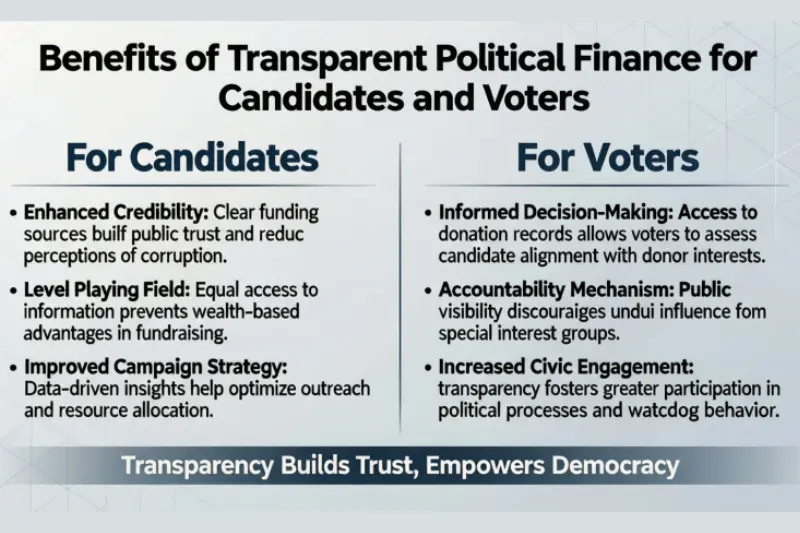
Transparency in Campaign and Political Finance Massachusetts isn’t just a bureaucratic requirement – it’s a cornerstone of a healthy, functioning democracy. Both candidates and voters gain tangible benefits when financial activities are open, clear, and accessible.
Benefits for Candidates
- Builds Credibility and Trust – When candidates report contributions and expenditures accurately, it sends a signal to voters that they operate with integrity. Trust can make or break a campaign, especially in local elections where personal reputation matters most.
- Prevents Legal Issues – Keeping clear records and being transparent ensures compliance with Massachusetts law. Mistakes or omissions can lead to fines or legal challenges, which can derail a campaign before it really starts.
- Improves Fundraising Efficiency – Transparency can encourage more donors to contribute. People are more likely to give when they see that previous funds were handled responsibly.
- Better Campaign Planning – Detailed records of past contributions and expenditures allow candidates to analyze what worked, what didn’t, and plan future campaigns more effectively.
Benefits for Voters
- Informed Decision-Making – Voters can see who is supporting a candidate and how the campaign is spending money. This insight helps people understand potential influences on a candidate’s priorities.
- Promotes Fairness – Transparent reporting ensures that no candidate receives an unfair advantage from undisclosed funding, leveling the playing field for all participants.
- Enhances Civic Engagement – Access to financial data empowers citizens to hold candidates accountable. When voters know where funding comes from, they can engage in meaningful discussions about campaign practices and political priorities.
Real-World Example
Consider a Massachusetts city council race. Candidate A discloses every donation and expenditure online, showing small donations from local residents and carefully tracked event costs. Candidate B, on the other hand, provides minimal reporting. Voters are more likely to trust Candidate A, and local media can cover the race with accurate information. Transparency here directly influences public perception and engagement.
Drawbacks and Common Challenges in Campaign Finance Compliance
While Campaign and Political Finance Massachusetts is designed to promote fairness and transparency, following the rules isn’t always easy. Candidates, committees, and even donors often face real-world challenges that can make compliance feel complicated – especially for first-time campaigns.
Common Challenges
- Complex Rules and Updates – Massachusetts campaign finance laws are detailed and sometimes change from year to year. What was compliant last election may need adjustments now. Keeping up with these updates can be overwhelming for campaigns without dedicated staff.
- Time-Consuming Record-Keeping – Every contribution, expenditure, and in-kind donation must be tracked and reported. Even minor expenses, like printing flyers or paying for refreshments at a volunteer event, count. For smaller campaigns, manually tracking all this can take significant time and effort.
- Risk of Unintentional Violations – One small oversight – like failing to report a $50 donation – can lead to fines or public scrutiny. Even honest mistakes can trigger compliance reviews, which can be stressful and distracting during a campaign.
- Limited Resources for Small Campaigns – Not every candidate can afford software, accountants, or compliance specialists. Grassroots campaigns may struggle to balance fundraising, outreach, and meticulous reporting all at once.
- Understanding In-Kind Contributions – Many campaigns underestimate how in-kind donations, like donated services or volunteer support, need to be valued and reported. Misreporting these contributions is a common compliance pitfall.
Real-World Observation
Take a local mayoral campaign in Massachusetts, for example. The candidate relied on volunteers to manage fundraising events. One day, they realized a local business had donated printing services that weren’t initially recorded. Suddenly, they had to retroactively adjust reports to stay compliant. Situations like this happen frequently, especially in smaller campaigns where processes are still being learned.
Balancing Compliance with Campaign Goals
While these challenges are real, they’re not insurmountable. Experienced candidates plan early, maintain organized records, and often use simple spreadsheets or software to track contributions and expenditures. Understanding potential pitfalls ahead of time makes compliance much more manageable and ensures campaigns remain trustworthy and legally sound.
May be you like it:
Top Finance Webinars to Boost Your Money Skills
My Funding Choice: Find the Best Way to Finance Your Goals
Wealth and Success – Habits That Transform Your Future
Invest Criteria: How to Choose Smart Investments
Real-World Applications: How Campaigns Manage Funds in Massachusetts
Understanding Campaign and Political Finance Massachusetts isn’t just about knowing rules – it’s about seeing how those rules play out in real campaigns. Managing funds effectively requires strategy, transparency, and careful planning. Let’s explore how candidates actually handle money in Massachusetts elections.
Setting Up the Campaign Account
Once a candidate starts raising money, the first step is opening a dedicated campaign bank account. This separates personal finances from campaign finances, making tracking and reporting simpler. Candidates are legally required to manage all contributions and expenditures through this account, ensuring the OCPF can easily audit transactions if needed.
Tracking Contributions and Expenditures
Successful campaigns often treat financial management like a business. Common practices include:
- Using software or spreadsheets to log every donation and expense
- Categorizing expenses (advertising, events, office supplies, travel) to simplify reporting
- Assigning a compliance officer or treasurer even in small campaigns to double-check filings
For example, a state representative candidate in Boston keeps a digital record of every $25 donation from volunteers and tracks in-kind contributions, like donated office space or graphic design services. This makes quarterly OCPF reports much easier to compile and reduces the risk of errors.
Planning Fundraising Strategies
Campaigns also use fund management to plan their strategy. Knowing exactly how much money is available and where it’s coming from allows candidates to prioritize spending:
- Grassroots events funded by small donations
- Targeted digital or local advertising
- Strategic outreach to key voter demographics
By linking fundraising data to campaign goals, candidates can spend wisely without violating contribution limits.
Transparency in Action
Many campaigns make their finance reports publicly available online. For example, in a Massachusetts city council race, voters could see every donation and expenditure in real-time. This transparency builds voter trust, encourages donations from individuals who feel confident their money is well-managed, and even helps campaigns learn from past spending patterns.
Real-World Insight
A local candidate once ran a successful $15,000 city council campaign almost entirely on small-dollar donations from residents. By tracking each donation and prioritizing low-cost community events, they were able to maximize reach while staying fully compliant with Massachusetts campaign finance laws.
Comparing Candidate Fundraising Strategies and Compliance Practices
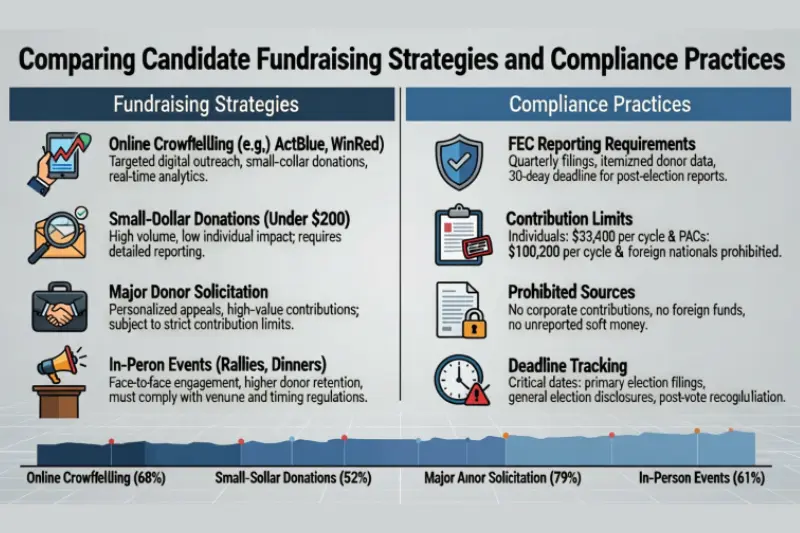
When it comes to Campaign and Political Finance Massachusetts, not all campaigns operate the same way. Candidates vary widely in how they raise funds, manage contributions, and stay compliant. Comparing strategies can reveal what works best – and what pitfalls to avoid.
Small-Dollar Grassroots Campaigns
Some candidates focus on small contributions from many supporters. This strategy is popular in local elections, where personal connections matter. Key points:
- Funding Source: Mostly individual donors giving modest amounts ($5–$100).
- Compliance Focus: Tracking hundreds of small donations can be tedious, but it’s easier to stay within legal limits.
- Advantage: Builds strong voter relationships and transparency, showing broad community support.
- Challenge: Requires consistent outreach and careful record-keeping to report every donation accurately.
Large-Donor or PAC-Supported Campaigns
Other candidates rely on larger contributions from PACs or wealthy donors. This approach can provide significant funds quickly but comes with stricter reporting obligations.
- Funding Source: PACs, high-dollar individual donors, or party committees.
- Compliance Focus: Must ensure contributions don’t exceed legal limits and all in-kind donations are reported correctly.
- Advantage: Immediate access to larger sums for advertising, staff, and events.
- Challenge: Voter perception can be a concern – campaigns must maintain transparency to avoid appearing influenced by big money.
Hybrid Strategies
Many campaigns use a combination of small-dollar donors and larger contributions to balance fundraising needs. This hybrid approach allows candidates to expand resources while maintaining grassroots credibility.
- Funding Source: Mix of individual donors, PACs, and sometimes party committees.
- Compliance Focus: Requires meticulous tracking across multiple sources to ensure all limits are followed.
- Advantage: Flexible and scalable, can respond to campaign growth.
- Challenge: More complex reporting and administrative overhead.
Real-World Example
Consider two Massachusetts state legislative campaigns:
- Candidate A relied mainly on small community donations. They held local events, tracked every $10–$50 donation meticulously, and filed all OCPF reports on time. Their campaign was lean but highly transparent.
- Candidate B accepted a mix of PAC and individual contributions. While they had more funds for advertising, they needed a dedicated treasurer and compliance software to manage reporting. Transparency was maintained, but only through careful management.
Takeaway
No single fundraising strategy fits every campaign. The key is aligning fundraising methods with compliance practices. A campaign that raises more money isn’t necessarily more effective if it risks legal mistakes or voter distrust. In Massachusetts, candidates who balance fundraising ambition with meticulous reporting often achieve both legal compliance and voter credibility.
Frequently Asked Questions:
What is Campaign and Political Finance Massachusetts?
It’s the system that regulates campaign contributions, expenditures, and reporting in Massachusetts elections.
Who must follow these rules?
Candidates, campaign committees, PACs, and anyone raising or spending campaign funds must comply.
What counts as a campaign contribution?
Cash, in-kind donations, and certain volunteer services used to support a campaign all count.
Are there limits on donations?
Yes, Massachusetts sets limits for individuals, PACs, and political parties to ensure fair elections.
Where can voters see campaign finance information?
All finance reports are publicly available through the Massachusetts Office of Campaign and Political Finance (OCPF).
Conclusion
Navigating Campaign and Political Finance Massachusetts is about more than following rules – it’s about running a campaign that is transparent, trustworthy, and credible. Staying organized, accurately tracking contributions and expenditures, and filing timely reports not only keeps you compliant with the law but also builds voter confidence in your integrity. Whether you rely on small-dollar donors, PACs, or a mix of funding sources, careful planning and attention to detail are essential.
By prioritizing transparency and leveraging tools or expert guidance when needed, candidates can focus on connecting with voters without worrying about compliance missteps. Ultimately, a campaign that manages funds responsibly sends a strong message: the candidate is ethical, organized, and committed to fair elections – qualities that resonate as much with voters as any speech or advertisement ever could.
May be you like it:
Best Day Trading Setup – Simple Strategies That Work
Business Finance Definition Made Easy for Understanding Info
